
What to Wear for a Month in Court
This post may contain affiliate links and Corporette® may earn commissions for purchases made through links in this post. As an Amazon Associate, I earn from qualifying purchases.
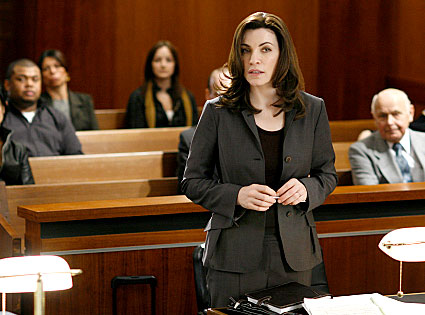
Today's reader mail comes from a reader who will be second-chairing a federal trial that is expected to last for more than a month…
First, do you think I should wear skirt suits every day or can I wear pant suits and save the skirt suits for days that I may actually get to examine a witness?
Second, how many suits do you think I need to keep on hand so that it doesn't look like I am wearing the same suits over and over again? Any suggestions for making the same suit look different other than wearing different accessories?
And finally, any suggestions on where to find nice looking suits in petite sizes without spending an arm and a leg since I will not need that many suits after the trial is finished.
A good friend of ours did mock trial in law school (and did very well), and passed along her (esteemed) coach's advice: wear skirt suits and be sure to cross/uncross your legs often if the other side is making a good point, and wear a lot of perfume. See? Golden advice. Whoever says sexism is alive and well is just crazy.
In all seriousness, though, wardrobe during trial is one of those times where the guys really do have it easier, because we guarantee you that they'll wear, at max, three suits and five ties throughout the entire trial and not give a second thought to it.
We've talked a lot about courtroom attire for female lawyers in the past, including whether you can wear “interesting” suits to court, how to stay polished when dealing with metal detectors, and (a while ago now!) whether you can wear flats to court. We've even talked about some finer points of women's professional attire in general, such as whether you should unbutton your blazer to sit, the best coats to wear over a suit, and whether your shirt collar should go in or out of your blazer.
What to Wear for a Month in Court
For you, though, we recommend sticking to dark suits, which, practically speaking, means we'd limit ourselves to three or four suits. One black, one navy, and maybe one in brown or gray. (If you're prickly about your accessories matching, go with all black accessories and choose the gray suit.)
Where possible, we'd get both the skirt and the pants to the set — J.Crew, Banana, Ann Taylor, or Theory all make separates.
We'll round up some of general suggestions for what to wear at the bottom of the post, but these are some of our latest favorite brands for petite suits:
Wondering where to find stylish petite suiting? Some of our favorite brands include Banana Republic Factory, Ann Taylor, J.Crew, and Hobbs — but see the full post for an extensive roundup for different categories of petite suiting including price ranges, extended sizes, and more.


How to Change Your Limited Outfits from Day to Day
In order to change up the looks, we'd recommend switching up the layers beneath the suit. For example: one day wear a collared shirt beneath the jacket; another day wear a jewel-necked silk t-shirt with a strand of pearls; another day wear a turtleneck with a brooch or a longer necklace (or, if you can pull it off, a silk scarf).
{related: here's how to build a capsule wardrobe for work}
Another easy way to get more outfits out of your clothes: look at all of the reversible workwear that's out right now! You might find a piece you like, or get some ideas for different ways to wear clothes you already have.
Your goal in dressing should be vanilla — you don't want the jury to notice your clothes in either a good or bad way. Absolutely avoid logo bags, as well as anything with sparkles. (This includes jewelry — if you wear diamonds you may want to skip cleaning them; if your engagement ring is particularly large and blingy, you may even want to remove it.) We'd even advise to avoid noticeable accessories, such as red-soled shoes like Louboutins.
As for skirts versus pants — we absolutely recommend wearing a skirt the first few days, if only until you get a feel for the judge and the lay of the land. After that, go with your gut. (We're guessing pants will be acceptable, but take your cue from other, more senior women on your team or your opponents' side.)
Finally, a note on undergarments (because, really, who else is going to say this to you?) — make sure your bras are not distracting. I.e., avoid the quad-boob look, avoid lacy bras beneath silk blouses, etc. Stock up on simple camisoles (we like Amazon's, honestly), as you're less likely to wear them twice without washing them, and you'll probably be too busy for laundry.
As of 2026, some of our favorite foundational garments include Spanx waist-shapers, Jockey slip shorts to prevent chafing while wearing skirts without hose, this full slip for wrap dresses and shirt dresses, this half-slip to prevent clinging, these pantyhose, and Natori bras, particularly this reader favorite.
Along those lines, know that men can get away with dry-cleaning their suits only once a season because they wear boxers — if you can, wear boy shorts beneath your pants suits rather than thongs.
What One Woman Wore for a 9-Month Bench Trial
Before we turn it over to our readers, we also asked a friend who worked on a nine-month (plus?) bench trial, 3000 miles from home — she stressed comfort. Her full response, below:
During trial, I had 2 black pant suits, a navy pant suit, a khaki-color pant suit, a dark green pant suit, a grey pinstripe pant suit, and 1 black pinstripe skirt suit. I rarely broke out the skirt suit though — with the long court days, followed by the long nights prepping for the next day, I much preferred the relative comfort of a pantsuit.
And as the weeks wore on, I actually took the khaki, navy, and dark green pant suits out of the rotation because it took too much energy figuring out what shirt and shoes to wear with them. (Admittedly, 99% of my work wardrobe is black, white or grey, so it takes a considerable amount of time for me to coordinate with any other color.)
To that end, I would suggest sticking with colors and pieces you already feel comfortable with, rather than getting things that are different just for the sake of diversifying the trial wardrobe. Otherwise, on top of all of the trial stress, you'll find yourself wondering if your outfit looks weird.
She also asked her colleague to weigh in:
I think I just had a black, gray, and beige pants suit, and a black skirt suit, but agree it was never as appealing to wear the skirt suit. I think part of that is that we were working in a borrowed office in a different city and so we were hopping into cabs, and then not getting home to change at all– just returning to the office to work all night in whatever we wore to court that day.
Ah, the glamorous life of a lawyer. Readers, any other advice on what to wear for a month in court?
Great Suits for a Month in Court
If you’re on the hunt for basic suiting, note that we did major updates to our roundups of interview suits for women, including doing roundups for suits if you're petite, tall, plus-sized, or pregnant — as well as how to wear a suit in general. We've also shared suiting alterations for women, pondered whether you should button a double-breasted blazer, and which Ann Taylor suiting line is the best. We also did a major update of our guide to stylish tops under suits!
Some specific categories of suits that might interest you:
Mid-Range Suits for Women
As of 2026, some of our favorite mid-range suits for women (which sometimes have such frequent sales that they come down to the same range as our “budget” suits) include Ann Taylor, J.Crew, Talbots, Banana Republic, All Saints, Favorite Daughter, and Spanx (!). (Talbots and J.Crew usually have plus sizes, and the others offer petites.)

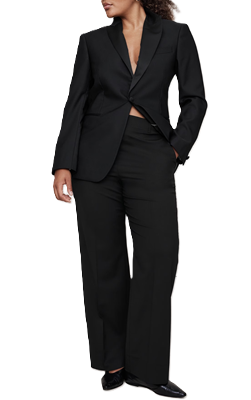


Investment Suits for Women
Some of our favorite “investment” suits for women include brands like Theory, Reiss, Hugo Boss, M.M.LaFleur, A.L.C., Vince, Brooks Brothers, Antonio Melani, Hobbs, The Fold, and Argent — expect to pay north of $550 (but probably less than $1200) for both pieces. Check out our roundup of the best seasonless suiting for more great options.


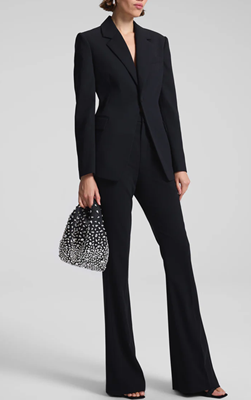
Travel-Friendly Suits for Women
If you want something that doesn't wrinkle a ton, you may want to check out some of these brands…
Hunting for travel-friendly suits for women? As of 2026, some of our favorites include options from M.M.LaFleur, Talbots, Paul Smith, and Ministry of Supply. Uniqlo occasionally has suiting in their AirSense line.) You may also want to check out our roundup of washable suits for women!
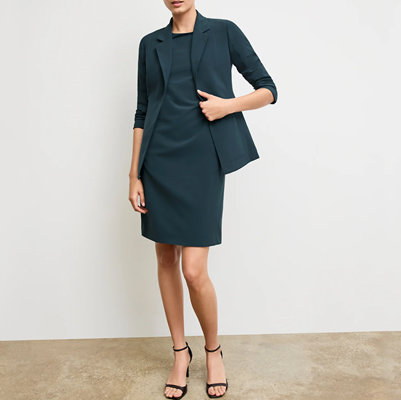

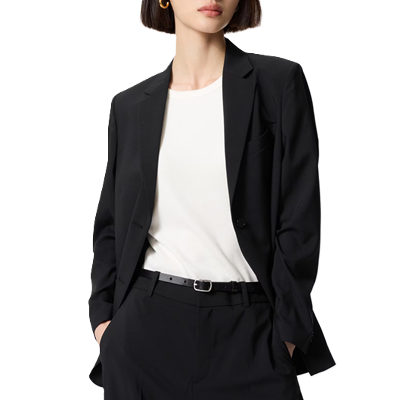
Our Latest Favorite Gray Suits
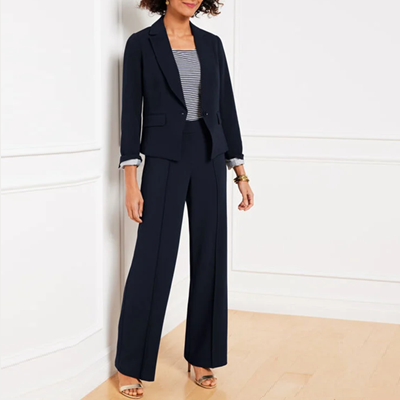
Our Latest Favorite Navy Suits
Navy suits are a great basic for interviews, conservative workplaces, and big presentations!
The pros are that navy is generally a more flattering color for many skintones than the harsher black, and one of the big pitfalls of navy (getting the navies to match) is taken care of by the fact that you're buying matching pieces in the same fabric!
The only con to navy suits is that they can be slightly harder to style — as a general rule of thumb, wear black accessories to dress them up, brown to dress them down.
Some of our latest favorite navy suits as of 2025 include these options:


Comfortable Shoes for a Month in Court
We've talked a lot about heels over the years, including our most comfortable work heels, nude heels, strappy heels, and products to make high heels more comfortable.
If you can wear heels or pointy-toed flats, those are probably the best options… but sometimes you need more comfortable shoes than that! Some options are below…
{related: check out our Guide to Comfortable Heels!}
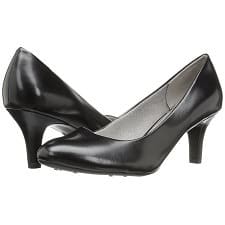
“Comfort” Heels for Court
If you're seeking “comfort heels,” check out brands like Clarks, Naturalizer, Trotters, Cole Haan, Sofft, Vionic, and Lifestride! If you definitely want a stable base, check out funkier brands like FLY London, Dansko, Eileen Fisher, and Børn — they're great as commuting heels (because you can maintain height for pants hemmed for heels), but they may also be just the ticket if you want something more comfortable.
Some of our latest favorite comfort heels for 2025 are below…
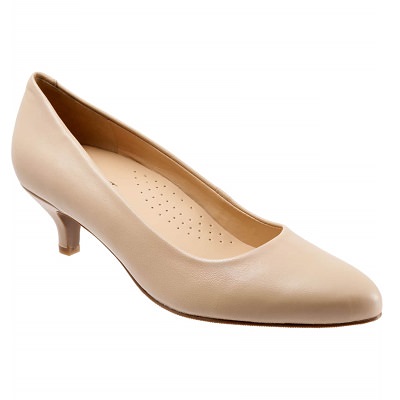


Low Heels for Court
Some of our favorite comfortable low heels for work as of 2025 include Sarah Flint, M.M.LaFleur, Ferragamo, Ann Mashburn, CK Calvin Klein, Trotters, and Sam Edelman!
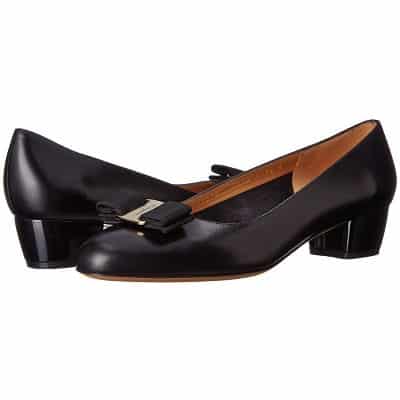
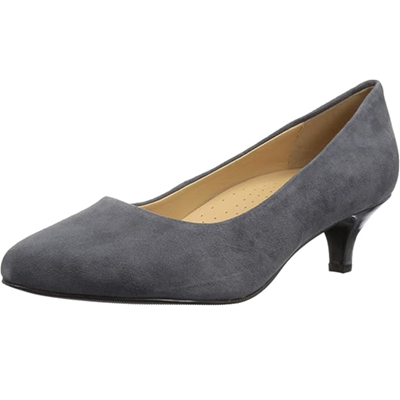
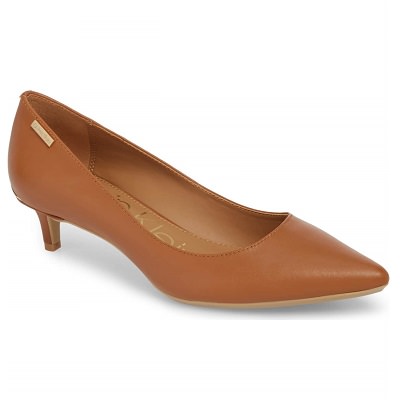

Comfortable Flats for Court
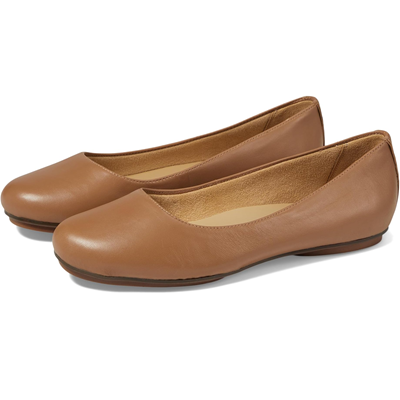
Some of the reader-favorite flats are pictured below — you may also want to check out sneaker flats and other commuting shoes for their comfort level, as well as investment flats if you'd like to splurge, strappy flats. foldable flats, and washable flats.
Some of our favorite comfortable flats for work as of 2026 include Margaux, AGL, M.M.LaFleur, Vivaia, and French Sole. On the more affordable side, check out Rothy's and Rockport. We've also rounded up the best loafers for work, and our favorite sneakers for work outfits!



Foldable Flats
Another great option here is foldable flats — you won't want to go hiking in them, but they're extremely lightweight and will protect your feet. They're perfect for a quick lunch run, or a shoe to wear when you're working at the office after that day's testimony.
Some of our favorite foldable flats as of 2026 include Silky Toes, Yosi Samra (at Amazon and Nordstrom), and Amazon seller HEAWISH. If you're looking to splurge, the Tory Burch travel flat also has a split sole. Vionic also makes an entire line of shoes that pack flat.


Pictured: The Good Wife, which we've been hearing amazing things about but have not yet watched.


The skirt suits give you more visual authority, so it is a good choice to wear those for cross-examining witnesses, as you suggested. A pant suit is still very authoritative.
As far as mixing things up, if you have a pant suit, you can have several different tops to wear underneath — a button down shirt, silk blouse, turtleneck, shell, etc. If your suit has a light pinstripe, you’ll find that if you wear a pale blue top, it makes the pinstripe appear to be the same color. And if you change tops, the strip seems to follow. Use that to your advantage!
conselleimageconsultant.wordpress.com
I have tried almost ten jury trials in state court in Northern California. I find that both skirt suits and pant suits are acceptable. I think that sometimes the testmony is somewhat boring and so the jury looks around for entertainment – and what you are wearing is something they look at. I don’t mean give them something to look at but be sure you shoes are polished and don’t need to be resoled or reheeled; no stray threads on your skirt or jacket; a professional looking purse. But I am in favor of colored scarves and will wear a teal suit in addition to black, navy, grey and dark brown. Also, consider knit suits like St. John. They are like fancy sweats! Comfortable, hold their shape packing, look polished.