
Coffee Break: Baccarat Rouge 540
This post may contain affiliate links and Corporette® may earn commissions for purchases made through links in this post. As an Amazon Associate, I earn from qualifying purchases.
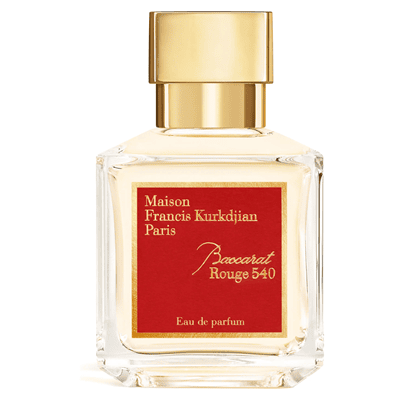
During the NAS I treated myself to a sampler of Maison Francis Kurkdjian perfumes and wound up swearing when I tried, and liked, Baccarat Rouge 540… leave it to me to like one of the most expensive perfumes. I thought my taste in Penhaligon’s was already a problem!
If you ARE looking, though, do note that Nordstrom has 15% off many fragrances, including expensive ones like Baccarat Rouge. The 1.2 ounce version is regularly $230, but comes down to $195 with the discount. (The 6.8 oz version is regularly $715… but you can get it today for $608.)
If you ARE looking, though, do note that Nordstrom has 15% off many fragrances in its “Early Black Friday sale,” including expensive ones like Baccarat Rouge 540. The 1.2-ounce version is regularly $230, but comes down to $195 with the discount. (The enormous 6.8-ounce version is regularly $715… but you can get it today for $608.)
There are also lots of popular fragrances from brands like YSL, Tom Ford, Carolina Herrera, Jo Malone London, and Valentino included in the sale, so it’s worth checking if you’ve had a particular perfume on your wish list (or on a gift list for a loved one).
(My beloved Yasmine perfume comes down to $297 today, which is only slightly more than I paid for it at the duty free shop in the Paris airport.)
(Of course, know your office and your coworkers before wearing perfume to the office — many, many readers have noted over the years that it can be a migraine trigger.)
Sales of note for 10/30
- Nordstrom – Extra 20% off clearance
- Ann Taylor – 30% off your purchase + extra 15% off your $200+ purchase
- Brooklinen – Friends & Family – 20% off sitewide and 50% off select bundles
- J.Crew – 2700+ markdowns
- J.Crew Factory – Extra 50% off clearance
- M.M.LaFleur – Save 20% on suiting and dresses! Try code CORPORETTE15 for 15% off on other items)
- Talbots – Enjoy 30% off your entire purchase


Some of my nice expensive bras have a bit more … odor … after washing than I would like. I think my sweating has changed with perimenopause. I wash my bras after a couple wears in All free and clear, on delicate / cold, in mesh bags in my front loader. Anyway, I will wash them more often, but any recs on what can help with the lingering (very mild) odor that wont be too harsh on my bras?
Delicate and mesh bags sure, but use hot water!
I don’t have any expensive bras that are made of fabrics that can handle hot water.
mine are mostly $60-$70 Natori bras and do just fine in hot, FWIW. I air dry.
You probably need an enzymatic detergent or booster. A lot of bras are made of synthetic fabrics that hold onto scents.
Which one? Do you add it into the load as a supplement?
I just do a Kids’n’Pets presoak since I already own it and no longer have pets.
But there are a lot of enzymatic boosters and detergents out there! A lot of them are marketed for sportswear.
Look up “spa day” on Reddit’s laundry sub. The version I do is super easy – start with “clean” item of clothing, add a couple tablespoons of Biz, and soak for 8 hours. Then use Biz going forward in the wash.
my yoga pants get like this too often — woolite won’t get it out, you have to wash with something like Nathan’s.
Maybe mix in some Oxyclean or other laundry booster? I know we’ve all been taught to treat things delicately, but that does not get rid of body funk, I’m sorry to say.
I’m not the morning poster, but have skin that is almost too challenging to me to put makeup on: older, oily, visible pores, rosacea. Any foundation becomes so noticeable — it hides in the pores or looks cakey where my skin isn’t obviously smooth. I want to do better, but any colored product (other than brow products) seem to just make everything worse.
If the answer is primer, please hit me with your good ones if you skin is like mine. If the answer isn’t primer, please tell me what it is.
Currently, despite doing periodic sessions at Sephora etc. when I need to get headshot or picture taken, I’m a sunscreen and brow only girl (my lips are pretty dark for a light-skinned person). The products for the picture often don’t look great a couple of hours later and I just notice how bad it looks when I try at home. It’s not an elevated look and I feel like I should have an A-game I can do for when I’m on camera or at big work events.
My answer is microneedling and lasers, but I find that a good mask can help (I am currently using the Skin1004 Clay Stick Mask but YMMV). Also, I use Supergoop sunscreen on my face, and it acts as sunscreen and primer and does not add moisture, which is helpful since I am almost 60 and my skin is still oily.
Yes, I also feel like my sunscreen has some primer quality to it with use. I use La Roche-Posay, which my dermatologist recommended.
Bobbi Brown Vitamin Enriched Face Base works well on my mid-50s face.
Spendy – and I’m sure there are cheaper options but I am too old to go through reddit forums and experiment – The Concentrate from La Mer. I have similar skin. It has a nice velvet feeling for makeup. You can buy as a sample size if you don’t want to commit right away.
I posted this morning about it but the neutrogena primer is pretty good. It’s not going to magically fill in your pores like some of the more expensive options but it keeps the oil in check and makeup in place for a few hours even with my very oily skin.
Benefit porefessional is great at filling in pores, but I’ve never been able to use makeup over it. Idk if I’m not applying makeup right or if you need to let it set a long time, but it always pills on me. It’s good when used by itself though, so if you don’t need the coverage of foundation then it might be a great lightweight option for you.
Silicone primers get a lot of hate but there’s nothing better at filling and blurring pores imho. Smashbox was my jam back when I used to do full face every day.
are you taking tretinoin or any other retinol? i think that’s the only way to fix visible pores.
i’ve always heard good things about elf primers, specifically the blue one. but a lot of those work by depositing silicones in your pores which looks great for foundation but seems like it would be horrible for your skin in the long run?
I have these same issues too: oily skin, visible pores, some redness, starting to get wrinkles. I like E.L.F. “poreless face primer” as a good basic option – it goes on very light but does a great job of smoothing everything out. I use the L’Oreal “redness eraser primer” often too – it has a green tint to cancel out redness and goes on matte. For something a bit heavier, I like Maybelline “master prime”. These are all drugstore brands but I think they are great, so I wouldn’t necessarily go straight to something expensive. You don’t need a lot – I just use them where I get particularly oily and they make a nice smooth base.
All drugstore products for me. Differin gel a couple of nights a week, then Neutrogena Hydro Boost water gel every morning. I find that I don’t need another primer after using that moisturizer, even in my oily T-zone. Usually Cetaphil gentle skin cleanser to wash my face, but on the rare occasions that I wear foundation I use the Neutrogena makeup removing wipes first. I’m in my 50s, and for now this routine is working for me.
Lancome discontinued the foundation I loved for years, so I’ve been using old-fashioned Estee Lauder Double Wear Stay-in-Place Foundation on days I need to look more put-together. I don’t get shiny with the Hydro Boost gel underneath.
For moms of older kids (or people who went through this), can you help me translate?
Our big city/county school system used to have a program called “talent development.” It wasn’t a “gifted” program but just seemed to have a floor — if you were wildly unproficient and far below grade level, you weren’t eligible; otherwise, you were. That fed into an IB middle school. That feeds into a large comprehensive high school where kids are funneled into an IB program unless they are “exceptional children,” which is largely kids with Down Syndrome and other developmental conditions. Most kids leave the IB program sooner or later, regardless of if they have a developmental condition, so that they can take electives and AP classes.
I swear I usually understand English words, but this is very confusing. The school says that the IB program is for “learners who love to engage with the material,” which seems to shade all other kids. They also hint that only kids from the IB program get into flagship state universities (although for future engineers, it seems that they must opt out of IB to take the core science classes that that State U wants to see). I believe that AP classes are seen as rigorous and that electives like band and newspaper are seen as helping to both develop a person’s unique abilities and provide fun engagement that makes school delightful and not just a grind.
Can you help translate the school’s very coded language and explain to me WTF is really seen as valuable in the US for high school (and beyond)?
i am very confused by your description. if you’re on the college track you go in the IB program?
all i know is that my son would have liked an IB program but it takes several years for a school to get certified to offer it. my understanding is that IB and AP are dueling systems for college credits-for-high schoolers, with APs being more widely accepted in US colleges.
https://www.reddit.com/r/APStudents/comments/14b54v2/ib_or_ap/
I think you really need to talk to parents of older kids in your school system. Both IB and AP programs are academically challenging – most schools don’t have significant offerings in both. I went to an IB school way back in the 80’s, and my kids went to a school w/ extensive AP’s in the late teens/early 20’s, and I for one can’t decode any of this.
The average student is in no way shape or form smart enough for IB so either IB has been incredibly dumbed down in the 15 years since I graduated from it or the school is doing something sketchy.
Even an OK student can love learning. It’s not just for the rock stars.
But it’s VERY advanced and rigorous. I was doing university level organic chemistry in grades 10/11. I didn’t actually learn anything new in my undergrad until 3rd year because IB put me so ahead. An ok student would drown.
IB and AP are different; are you just hoping to understand the difference?
I don’t know what’s confusing about “learners who love to engage with the material” or why you think that’s throwing shade. School is compulsory; there are always students who attend unwillingly and avoid engaging and want to do the minimum until they can get out). There are students who are happy to do enough towards their goals and have a balanced experience. And there are students who are very academically engaged and can’t get enough and academics are the delightful fun engagement that helps develop their unique abilities, not electives.
Maybe their phrasing isn’t great, but I think they’re saying that some kids who are capable of IB are miserable in IB, so it goes best for those who “love” it.
Capable but miserable describes a lot of IB students, in my observation.
Yes. And some really do love it and are happy. I think that’s what they were trying to say.
AP-taking students are what? Chopped liver?
Last time I checked, AB and BC calculus are important to show for many STEM schools and degrees. Not some IB word salad like “applications and analysis.”
No, not chopped liver at all. Like I said, what I gather is that it’s a different type of learning altogether. AP courses are plenty challenging.
Admissions staff at top US universities that draw applicants from around the globe know what IB math HL means, just like they know the equivalent in A-levels, the French Bac, etc. Someone isn’t going to get turned down from a world class university because they have strong math qualifications from a system that isn’t AP.
Yeah, that’s some confusing wording. There are big differences between an IB program and AP classes. IB is an intense experience. In our district, half the kids who start IB never finish that track. It’s a ton of extra work, though I’ve heard it prepares kids VERY well for college. It’s a much different type of learning experience. With AP classes, students can do more picking and choosing based on their interests.
I have a kid who is a very high academic achiever, loves learning, and didn’t want to touch IB with a ten-foot pole. The intensity makes it a lot harder to have the full high school experience, is what I’ve noticed.
My feeling is that AP classes are more than adequate for college preparation but definitely talk to other parents in your specific district.
I loved the IB diploma program when I was in high school because it let me go further in the areas I loved and wanted a challenge and let me get an adequate education in a few areas to balance out the intensity of the other subjects so I wasn’t overwhelmed. I went on to attend a top US university. I felt I was as well-prepared as most students.
When taught well at a school that offers one’s preferred subjects at Higher Level, I think IB wins hands down for a very bright, motivated students. That said, if the instruction is poor, I’d prefer AP because it’s easier to self-teach (which I did for a subject I wanted to learn). Everything I loved about IB makes it horrid without good teachers: writing, discussion, labs, and longer-term projects.
This fragrance makes me feel like throwing up, and I’m a frag head. Ambroxan bombs are of the devil.
I’ve never explored the health insurance exchanges or the marketplace outside of work coverage. Now, I’m curious.
Is anything age-rated or age-based? And can you get declined for renewals?
IDK how to even get started.
go to healthcare.gov and fill out the questionaire. if you have a financial planner “who has a guy” for everything he may know a health insurance broker, but you’re really not going to get better than the marketplace. I’ve tried joining ABA and other membership things in the hopes of getting better options but no, it is all exactly what’s on the marketplace.
i suspect the questionaire determines your pricing but i’m not sure.
Do you actually need health insurance or is this another hypothetical? Sounds like a nightmare way to spend your time if the latter.
Your state may have its own exchange, in which case you should start there. Probably search for “my state individual health insurance market exchange.” Individual health insurance rates are based on age and zip code. Rates definitely rise with age. Depending on your state, there may be premium subsidies, but your eligibility for subsidies is based on your individual income. I have an individual marketplace plan because I greatly value the freedom of not being tied to my employer and because it makes me feel much more in control of my (very complicated) healthcare. For me, that peace of mind is worth the money. You should be able to see rates for your state with only a few inputs of information: age, zip code, and income.
And if your state has its own exchange, make sure you’re on it! And not some knock-off, sounds-like, similar-name website. You can only get subsidies during the year if you’re on an official, government website.
I got laid off in 2020 with about 5 years to go before I could retire. I became a consultant/contractor then and have been ever since. I get my health insurance from my state’s marketplace (I’m in CA.) I use a broker because she’s good and makes it eay for me. My plan is exactly what I had as an employee. I’m on a gold PPO plan. It’s not cheap, I don’t qualify for subsidies, but all I want is access to healthcare, and it works for me. I’ve had a couple of major, major healthcare events so I’m not really “insurable” in the traditional sense. I’m so glad this is available to me.
Just be sure to NOT google your state + Obamacare. You’ll get pages of options that look legit but are really junk coverage that won’t actually work if you ever need it.
No matter where you live, if you start with http://www.healthcare.gov it will send you to the right place.
Then once you’re in the right marketplace (your state’s or the federal one), if you enter your age, income and zip code then it will give you options. Be sure to review formularies and lists of in-network providers to make sure the plan will work for you. Generally, the lower the metal tier (bronze vs. platinum) the lower the premium and the higher the out-of-pocket costs when you actually receive services. Start with a silver plan since that is what is eligible for premium and cost-sharing subsidies, depending on your income.
Last random tip – it all works better on a laptop than a phone for reasons that are not at all clear to me. If you start to select a plan and then close out, you might get emails to try to get you to complete it (I’m with Aetna, let me help you purchase your plan). Those can also be scams, so best to just log back into your account and purchase that way.
The main age consideration is, insurers on the marketplace can -and do- charge more based on age.
They cannot charge more, or decline coverage for, pre existing conditions or medical history.
So your marketplace insurer might decide to stop offering the plan you’re on to anyone, or even leave your state overall, but they can’t be like “you, specifically, were really expensive last year so we’re non-renewing you or tripling your specific premiums”
Unsubsidized premiums on the marketplace are really expensive. If you’re thinking about taking this route, just Google the exchange for your state, and do a search and see what the options are though