
Thursday’s Workwear Report: Curve Love Forme Bootcut Pant
This post may contain affiliate links and Corporette® may earn commissions for purchases made through links in this post. As an Amazon Associate, I earn from qualifying purchases.
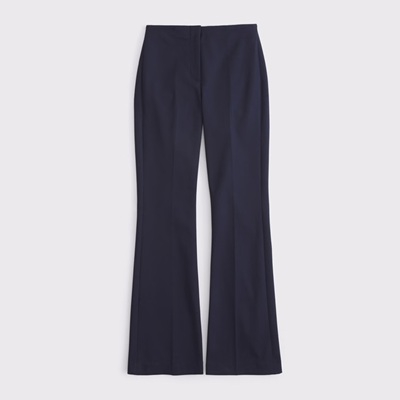
Our daily workwear reports suggest one piece of work-appropriate attire in a range of prices.
I was a big fan of the Abercrombie & Fitch Sloane pants when they came on the market a few years ago, so I’m interested in trying out their new bootcut options. This pair has a bit of stretch to it and reminds me a little of my beloved Express Editors.
For me, the best part is that they come in both a standard and a “curve love” fit to accommodate different body types, and go up to a waist size of 38, which is a little different than the Abercrombie I remember from my youth! The pants also come in four different inseams, giving you a lot of options for finding something that fits well, and avoiding trips to the tailor.
The pants are $90 at Abercrombie and come in sizes 23-38 with extra short, short, regular, and long inseams.
Sales of note for 10/23 (ALSO, friendly PSA – check any NAS or Amazon Prime Day purchases for the return policies…)
- Ann Taylor – 30% off your purchase + $50 off your $200+ purchase
- Brooklinen – Friends & Family – 20% off sitewide and 50% off select bundles
- J.Crew – Up to 40% off select fall styles. Also, donate any gently worn coat in one of their stores and get $25 off your next purchase of $125+.
- J.Crew Factory – 40% off new arrivals + extra 15% off orders of $100+
- M.M.LaFleur – 72 hours only, save 20% on jardigans (Try code CORPORETTE15 for 15% off on other items)
- Nordstrom – 5840+ new markdowns for women, up to 40% off
- Talbots – 50% off one regularly-priced item, 40% off everything else
- Theory – End of season sale is on with extra savings (new prices are marked)


Gift link to the Chemerinsky op-ed in today’s NYT on how the law should change to allow Good’s family to sue the shooter:
https://www.nytimes.com/2026/01/14/opinion/renee-good-civil-rights-constitution.html?unlocked_article_code=1.ElA.v-0f.Lmb2nBTusoC2&smid=url-share
(As per discussion yesterday. He’s a famous constitutional law scholar.)
Thank you. Some of you may recall reading his name here after he and his wife were subjected to an antisemitic attack in their own home in Berkeley and then accused of being Islamophobes (and sexual harassers??) for asking the offending student to leave.
Yes. That was truly awful. He has also been pretty blinkered on the subject.
IIRL, laws generally have prospective effect only. And since it’s immunity for a federal LEO, you’d need a federal law to do that. I am not holding my breath on that.
His con law treatise, or outline or whatever you call it, was what got me through con law back in law school. I have all the warm feelings about Chemerinsky. Heard that he was amazing as a law school prof at UC Irvine. I don’t know if he’s still teaching as the law school dean at Berkeley?
To be fair, I liked his treatise, but he did cite himself in it often as the sole citation for something. And loses a bit of laws are made by legislatures, so if you don’t like a law, your real remedy is often the political one. I think he probably would have been a good mensch of a neighbor.
He’s such an amazing person. Such a breath of fresh air after some really dreadful Berkeley Law Deans.
Berkeley law grad here. I’m a big fan of Chemerinsky.
He was my con law professor at USC way back in the 80s. Huge fan.
Sorry for the TMI question. Does a seamless cotton pair of undies exist? Or am I looking for a unicorn? I want something comfortable with full coverage but no VPL.
Also, how do I avoid VPL with my existing cotton bikini cuts? I feel like they fit well and don’t dig in but then I notice the lines even when wearing jeans. Google says I need to size up but wouldn’t that make it worse? Normally a 4-6 in jeans, usually buy medium. Maybe I need large?
I don’t think that bodies work that way with elastic in that area. They don’t need to dig in to show. Sadly. Full skirts and those rufflepuff dresses are good for this, as is any thicker fabric (corduroy). But any fabric if it is tight / thin will show what is underneath, especially if it is a lighter solid.
I like laser cut underwear for no VPL. But it’s not cotton except for the gusset.
And the risk with sizing up is wedgies.
What brand do you recommend with a cotton gusset?
don’t they all have cotton gussets? my problem has always been that the cotton gusset is just a lining, if the panty is polyester is will also be underneath the gusset.
Soma makes their Vanishing Edge line in cotton, and I think they’re effective for VPL.
I swear by the non-cotton version of these.
Not really, no. I think whatever you find when searching is either going to be a synthetic blend or not really no-show.
Maybe wear something smoothing over them, like some slip shorts?
I generally do not wear pants tight enough to see a vpl, so ymmv.
On a recommendation from here I tried the natori girl bliss cotton panties.
I am the same size as you and ultimately went with large.
They are not seamless; however, they are excellent. Wash and dry (in dryer) well.
The issue is the elastic that holds it to your body will also show a line. I wear my cotton undies for sleeping and with sweats and loose pants. Laser cut with everything else.
This aren’t full coverage, but as someone who wears mostly bikini cuts I find them pretty comfortable
https://www.ae.com/us/en/p/aerie/undies/cheeky-underwear/superchill-no-show-cotton-cheeky-underwear/8443_8595_012
They’re not perfect but I have found these to be pretty good for avoiding VPL (they certainly don’t show through jeans unless your jeans are super tight): https://ongossamer.com/products/cabana-cotton-bikini-3-pack-black
Bikinis may be your problem. As I get older I care less about it, but if I want to avoid vpl, I either go thong or full briefs. Anything in between gives me a wedgie and shows through.
+1
I cannot with thongs, but full old-school cotton granny panties in a generous size so they are not snug are my jam. No wedgies, no VPL. Seems like VPL happens to me, regardless of a seamed or lasered edge, if that edge crosses the middle of my cheeks at all. If the fabric fully encompasses my cheeks so the edge is in the fold below them, no VPL.
I was going to ask this question today, thank you! I had a c-section 6 months ago and I’m finding that I need underwear that go over the belly/c-section shelf. All the recommendations for c-section undies seem to be non-cotton. But those get so hot! The shelf gets kind of swampy (gross). My cotton maternity undies are much more comfortable but they show VPL.
Weight / workout question. Looking for advice but starting with I already have a lot of shame with how I got to this point. I’m 39 with a 4 year old. I’ve been steadily gaining more and more weight and becoming less and less active. Now I’m up to 225 and a size 18. The more pressing issue than size is I’m getting winded walking up stairs. I drive to work, sit at my desk , come home for dinner and more work and crashing. I’m barely even walking during the day. I want to really focus on my health this year. But in one month we go to Disney world, and I’m actually really worried my fitness is going to impact the trip. Does anyone have a realistic plan to get in better shape in 4 weeks? Everything I look up is either very gradual and takes 6 months, or starts with a walking running 3 miles on day one. Ideally there would be a lot of days I could do the workout in the basement. I don’t need a miracle in 4 weeks but I’d like something realistic to start – a video or YouTube course would be great. (Or if this is a passion for anyone, a weekly suggested plan I can print). Thank you very much
Maybe I’m not recalling correctly, but I thought that couch to 5K apps and programs started more gradually than that. Four weeks is enough time to go from deconditioned to conditioned. Are you too busy to go to PT? Do you have the best possible shoes?
Couch to 5k is great advice. I’d also work on strength training. If you have any physical issues like bad hips or knees that will really affect your trip you should start figuring those out in earnest now. Maybe you need a knee brace for a lot of walking. Maybe you need to do hip exercises like MYRTL. If I sit for too much my hips are a disaster.
Honestly, I’d look into a GLP-1. At this point they’re everywhere and so much faster (and that presumes diet and exercise even work for you, which is much harder as we age and have life going on).
Going on a GLP-1 is a great idea and weight loss can make fitness easier, but at some point we still have to go from barely walking to walking more. It might help to get an estimate from the theme park enthusiasts of how much walking a trip to Disney world actually entails, and work backward from there. (Googling suggests minimum seven miles. That’s with lots of stops and starts, but I think I’d feel better if I’d made it up to 3-4 consecutive walking miles on a weekend between now then.)
I actually did just get approved for zep bound yesterday. My understanding is the first 4 weeks is a very low dose that doesn’t do as much. But yes besides the weight the fitness needs to be worked on too. I’ll take another look at couch to 5k. It felt daunting when I first looked but it was also a snowy cold day haha.
In my experience, couch to 5k is actually too much as a first step during times when I’m really out of shape. I agree with the other folks that just walking as much as possible in the next month is a great way to start, and then post-Disney you can think about other options.
Disclaimer: Been on a GLP-1 for almost 2 years.
In my early days of taking the meds, even though my actual weight loss was low/slow those first few weeks, I FELT significantly better. I don’t think I realized what inflammation felt like until I started seeing a reduction. For real – the scale said I’d lost less than 5, but physically felt like I was down at least 10.
Agree, I have never been able to get through couch to 5K, it’s hard if you are not a runner or jogger. I can easily walk miles and hike up not to steep mountains, so I just don’t have the running gene. I would say just focus on walking more and doing stairs if you have a place nearby where you can add those in? I have a steep set that goes down to a beach by my house that kicks my a**, it’s about 100 steps each way and that is enough to get me in better shape to keep up with my more fit family. I’m a size 12 fwiw.
I’m realizing that when I did couch to 5k I just walked and ignored anything about running or jogging!
The only way any couch-to-5K type program works for me is if I begin with a baseline level of fitness from walking, start with shorter running intervals than the plan recommends, adjust the length of the intervals more gradually than the program does, repeat some weeks before ramping up to the next week, and take about twice as long as the program is supposed to take.
I say this as someone who lettered in track and field in high school.
The main risk with going to aggressive with something like Couch-to-5K is risk of injury – which sidelines you or just gets worse if you try to push through it, and then you end up discouraged, facing 6 months of PT, and *less* active. I LOVE running but it’s among the more injury prone forms of cardio, so there’s good reason to go slow. So listen to your body – if your body is telling you couch-to-5k is too much, too fast, don’t try to just force yourself into it!
I’m not a PT or anything, but my general rule of thumb for recommending/not recommending couch to 5K is “Can you already walk a 5K (=3.2 miles) comfortably? If you can, it’s a reasonable way to get into running; if you can’t focus on the walking goal first
Many people do start to see immediate weight loss on the lowest dose. I did. I also saw the side effects, but at least I knew it was working for me.
This is such odd advice for something that’s happening in a month.
No it isn’t. Anecdotally I know many people who are losing 10lbs a month on them.
If it were me, I would do a LOT of high cardio, low impact over the next three weeks (swimming, elliptical). That will preserve your joints.
Dial it back the week before you leave.
I’d also suggest to go to a running store where you can discuss your walking needs for a Disney trip and needing to work up to that. They WILL HAVE SHOES FOR WALKING. They will measure your feet and let you try on shoes and walk around (do this at the END of a day you have been on your feet more, like a Saturday or Sunday). But you need supportive shoes and have time to break in a new pair so no surprises. But don’t neglect the feet — they have a lot of work to do and any old / worn sneakers may not be providing the support your feet need. They may also be able to suggest good walking routes and maybe a beginner run/walk group. You can do this!
Yes, this! Get good shoes!
Walk, walk, walk, walk, walk. You do that every day or close to it and you’ll be fine for Disney World. This is about fitness right now and not size – you say you’re doing very little right now and that’s why stairs are hard. I know tons of larger women (myself included) who are active and it makes all the difference.
The beginning of any true “couch to 5K” program for someone who hasn’t even been walking will be …. walking. Start there.
Even if it’s pacing indoors; use your phone to count steps if it helps. (I get not wanting to fall on ice right before a vacation.)
+1. I wouldn’t worry about basement workouts for this month (unless you have a treadmill). Until your trip, I would just try to walk for however long you can every single day. After the trip, you can consider other workouts.
Yep – other workouts are a harder lift to begin (still worth doing eventually) and walking is what you need to get ready for.
There is also value in splitting up the walks between morning and night. If you can only walk for a half hour before you’re at your limit, do that twice a day rather than try for a one hour session.
You have plenty of time to get in shape for your vacation. You don’t need to lose weight, just get your body back to being comfortable with being on your feet and walking at a leisurely pace for a sustained amount of time.
Start with taking the long way to the bathroom at your office, every single time. If there’s one you can access on a different floor by using stairs, use that one (just one floor of stairs to start with!).
If your office is situated where you can take a walk after lunch, start with just a 10 or 15 minute stroll “around the block” each day after lunch. I assure you, no one will notice that time you take – I have struggled with the “can’t leave my desk” syndrome and can attest that really, no-one will notice. Or, if your office has a gym, bring in sneakers and do 15 minutes strolling on the treadmill after lunch – you won’t get sweaty!
On the weekend, take a longer walk. Start with a 45 minute stroll around your neighborhood, or a mall if the weather isn’t good for walking outside. You don’t need to go fast. Build up to being comfortable walking for an hour.
Over the course of four weeks I promise you will get so much more comfortable with sustained walking and your vacation will be fun!
In addition to this and general walking, I’m a fan of functional movement as a way of getting used to moving and building muscle. So at home, walk up/down the stairs in your house once an hour. If hauling/lifting luggage is hard for you, carry a suitcase up and down those stairs, and practice lifting it over your head as if you’re putting it in an overhead bin.
Also, if your baseboards, ceiling fans, or cabinets need cleaning, or your couch needs to be vacuumed thoroughly, this is the time to do it. Bending, lifting, stretching, crawling along the baseboards on the floor . . . it’s all a “workout.” (Zero fun, but effective.) Maybe you only do 5 or 10 minutes a day, but it adds up.
And . . . dance. Fun music once a day and a 5 minute dance break. Any movement counts.
I like Fitness Blender for at home workouts. You can filter for different levels of difficulty and look read the writeups to get an idea of the different exercises.
I use a lot of their workout programs because a video is picked out for me each day and it’s one less thing to think about.
I also like MonikaFit on YouTube. she has a lot of no-equipment, shorter workouts.
I also second Fitness Blender! They have a great range of beginner workouts and have lots of great resources for getting in shape.
Agree with comments on adding walking. You can start your first week adding in short walks throughout the day instead of one long one. I sit a lot and try to get up and walk around the floor once an hour. I would recommend you also add in a stretching or mobility set (something quick 5-10 minutes). Increasing walking may tighten your calves if you don’t stretch. I think it works best to focus on amount of time walking versus distance. So, try whatever makes sense (start with a 15 or 30 minute walk) and then evaluate. If you can get to the point you can comfortably do 10-15K steps a day, I think Disney will be manageable. For disney plan to have two pairs of shoes with good cushion, its actually a lot of standing that bothers people even more than the walking.
IME Disney is more like 20K steps per day. In addition to walking as much as possible before the trip, OP can consider building in midday breaks (I don’t like to do this because getting back to the hotel and then returning to the park takes so much time and effort, but some people swear by it), shorter park days, and/or building in rest days between parks.
Disney with a four year old is not 20k per day. EPCOT is a 5k loop if you aren’t crisscrossing, same for Hollywood Studios, the other two parks are a bit more.
We definitely did at least 20k steps per day at Disney World even with small children.
Lots of good advice here about just walking more each day between now and your departure date, aiming to get to the point where you can walk a few miles. Don’t push yourself too hard though if you are starting from a very low level of fitness. That’s a good way to stress your body and hurt yourself.
Just wanted to post good luck!! I think if you get some walking in each day, you will be fine for Disney. There are lines to stand around, you will be on rides, plus stopping for snacks and meals. So it is a lot of walking but also natural periods of rest.
In addition to walking, you have four weeks to sort out chafing solutions. I don’t always chafe, but when I do it’s definitely when it’s hot and humid at Disney during a 20k step day.
Good call! Gotta go with MegaBabe – they have travel size versions and I always have one in my bag on sweaty vacations. Don’t be shy about reapplying – so maybe get a few just in case!
Also, if it is cold where you are, it might be worth doing a lot of walking inside in the clothes you may wear on your trip. In warm weather, I like a longer golf-length skort (vs a shorter “tennis” length) because I need the chub rub shorts underneath. Regular shorts can ride up or get awkward and the chafing can be unreal.
Hi! Are we twins? I was in a similar situation a few months ago. Two recommendations are the Peloton app (they have walking workouts that you can follow on a treadmill or not) and doing something to track your steps each day to keep yourself accountable. I realized that on a normal workday, I was often doing less than 3,000 steps. Once I started keeping track, I got it up closer to 10k per day. If it would help motivate you, I also joined a StepBet, where you put money into a pot and have to hit certain goals to get it back.
I’m almost embarrassed how big a difference an activity tracker watch made for me (I got a Garmin and absolutely love it after tweaking some settings).
Try and walk for at least 30 minutes and then work up to an hour everyday. I like to do a mix of treadmill and outdoor walks. Sometimes it is nice to just zone out on the treadmill but it can get boring so that is why I do both. Start slow and work on just being able to move for 30 minutes and then start trying to go faster and longer. I joined a cheap gym mostly for treadmill access but once I was there I started trying the other cardio machines and the weights.
Do you want an accountability buddy? I’m also really out of shape. I just bought a walking pad and my goal is to start walking at least 5 minutes every night (with the hope that, once I get going, I will walk for a mile or so). Post a burner email if you want to connect.
#1 rec is : get yourself some good shoes (new! the foam and stuff wears out). Maybe even consider scheduling an appointment at a running store with the foot-measurers and everything (tons of people come in to buy walking shoes; I promise)
Lots of great advice on movement and exercise so I will add to make sure you’re also drinking plenty of water (and don’t skimp on electrolytes). This will help with your energy throughout the work day and get you used to properly hydrating before your trip .
Hey, I just want to say that a lot of us have been there, and please don’t feel shame about it. You’ve been less active in part because you are serving other people’s needs, and there’s some really beautiful and caring about that. But caring for yourself is important too, and you are recognizing that now.
This is so kind. Thank you all for the nice comments and good advice !!
Walks at lunch are the best. I’m usually more than ready for a break from work at that point, so it feels like a treat to leave my desk and clear my head. Walking is easy on your body and doesn’t spike your hunger. It’s great for weight loss.
Getting good shoes is the most important thing you can do before this trip. Disney is a lot of standing and walking. I don’t care if you’re the best crossfitter on the planet, if you don’t have good shoes to stand around in then you’re going to be in pain.
Stretching will also be important – during the trip too! Hip mobility, hamstrings and calves, and foot mobility. Yoga is great for all of this, but simple stretching is good too.
I am in similar condition to you. In mid December I started the Muscle & Strength 3 Day Full Body Women’s Dumbell Only Workout (which should turn up if you google that phrase and go for the one at that fully spelled M&S url – it’s free and has a printable reference sheet, with videos you can click through to see the motions and form tips). I do abs Mon, upper body Tues, lower body Wed, then repeat abs Thurs, UB Fri, and LB Sat. Take Sunday off. I have a full dumbell rack available but stick with weights that don’t leave me hurting (like, 5lbs max the first week).
After the second week, I started vaguely feeling better. After the third week, I increased the weights because they were noticeably too easy. Week four and I feel so much more energetic and capable.
https://www.muscleandstrength.com/workouts/3-day-dumbbell-only-workout-for-women
I forgot to add: I really wanted to like couch to 5k, but I just don’t. I really hate running, more than being unhappy about my body. I hate it enough that when I force myself to do it, I end up attributing that emotion to all physical exercise and shun it in every form for months after. It’s not good.
Get a fitbit or Apple
Watch or app for your phone and track your steps. Make yourself walk 10k/day.
If you want to not be winded, do couch to 5k. You don’t have to go all the way to 5k, but the run/walk intervals will really help you build stamina. (Source: my lazy a$$ went from gasping for air after 30 seconds of running to running a full 5k).
When I was at Disney we walked about 14,000 steps a day. If you don’t think you can walk you can always use the motorized scooters. A lot of obese people used them.
Yikes at that last sentence. Way to twist the knife.
I highly recommend the Up & Moving online course (or any of the Up & Running team’s courses, for that matter). It is designed for six weeks but you can shorten the interval between workouts and get it done in four weeks. There is a small fee but the program includes personal coaching and encouragement. I’ll add the link in a reply.
http://www.upandrunningonline.org/up-and-moving/
I did 1000 step walking videos on YouTube to start. Then work your way up in steps. They are kind of like old school aerobics classes with fun music that are free and you can do them at home. You also don’t have to worry about weather either.
Have you considered adding a GLP-1? Am asking because the biggest surprise for me was what a big impact it had on reducing inflammation. The day I had no pain and had lost some of the puffiness. It has made movement much easier. Just a thought.
Sorry, meant the “next” day…
Seconding this. I haven’t lots too much weight yet (recently started at 1/2 the regular initial dose of zepbound for other reasons), but have definitely noticed walking feels easier (and I do walk every day thanks to my dog). So pleasantly surprised at what I think is a reduction in inflammation.
Can you walk a mile? Start with that. Try to walk 1 mile 3 times a week. The next week, try walking 1.5 miles three times a week. The 3rd week, try 2 miles 3 times a week, and so on.
If you can’t do a whole mile, then start with a half mile. You can do it!
Back when I was super unfit, I still remember how excited I was when I hit that first 1.5 miles. I was so proud of myself.
It gets easier. Just build incrementally so you don’t hurt yourself or get discouraged.
And I can’t speak to Disney World, but Disneyland one day and California Adventure the next day, were about 12 mile days on my Fitbit. That includes the 1 mile to and from the hotel and parks. (We were hard core though, and tried to get in all the rides, so we were zigzagging back and forth through the parks. YMMV.)
I have a new c-suite office to decorate and I’m wondering what your opinion is on office artwork. Do you choose what you enjoy and not overthink it? Abstract? Landscape? Photographs? My office is sometimes used as a place to discuss social work-type issues for staff, so I’m going for soothing and cheerful. I’d love to hear your opinions on this! Thanks!
I am team what I like but the office version in that they coordinate with the colors there. I have a mix of paintings and art photos that I enjoy seeing on my walls. My team appreciates a glimpse into my real personality.
I do prints from a local artist. Local landmarks.
+1
Leaves room for personality, but still pretty generic. Plus you get to support a local artist!
This is hyper-specific to my field, but my office decor pet peeve is photos of Clarence Earl Gideon. Every one of these I’ve seen was in hung by a smug jerk whose ego actually got in the way of advancing the cause. When they are official decor hung in public areas by office leadership, the more Gideons you see, the more of a cult of personality the office is.
As a long-time public defender, I understand!
I’ve seen both generic and highly personal and both are fine. If you have things that naturally would be personal use that – photos and art of places you’ve traveled, I worked with someone once who had cool special maps of wine country or vintage ads from the company which was 100 years old. But also don’t overthink it if you just want to get some stuff from crate and barrel or whatever on the walls.
I think you do what you like while being mindful that it’s a work office. So if you really like large vintage posters of Absinthe and/or other spirits, maybe save those for home, but otherwise I wouldn’t overthink it.
I did abstract, non-descript splashes of color from z gallery back in the day. Think what you see when staging a house. Checked the art box and I always enjoyed people guessing what it was. This was a choice as at home our art collection is very much mixed media, collages, and a bit wacky in a throw back to 80s artsy yuppies.
I have a print from an artist I like, some art made by clients, and art my kids made. I don’t ever have clients or opposing counsel in my office.
I have some vintage posters for tourist attractions in our area. (Being a “local” firm is very important to our brand, so they’re old illustrations telling people to ski and hike in our mountains.) They’re pretty, but unobstrusive and non-controversial, which I think is the vibe you’re going for!
I have some abstract art I love and some framed photos of places related to the topic of my work
I chose what I liked–I’m the one that has to look at it all day. I mostly have my own landscape photos from various travels (I am a reasonably good photographer), and a couple of random pieces of art.
The best office artwork I saw was a colleague who had bought a fairly bland black and white print, and had her young daughter colour it in. It looked very much like designer modern art, but those of us who knew it was her daughter’s colouring thought it was very sweet. YMMV!
I think it helps to convey a message. So yes, pick what makes you happy, while considering the message you’re sending in the form, subject matter, and artist for your art. You’d be surprised by how many notice.
I’ve made it through the initial screening for a state job and have been sent essay questions. The first question is “describe your experience in this field.” I’ve been in the field 15 years and they already have my typed-in-not-a-resume-resume-bc-resumes-aren’t-allowed. The question’s so broad I don’t have any idea how to approach it. Any insight from the hive? Thanks.
Work backward from what you are hoping to convey. Are you mostly trying to quantify the extent of your experience? Are you hoping to highlight experience that’s especially relevant to the job you’ve applied for? Shape your description to support the message you want to send (“I have extensive relevant experience” or whatever that message really is).
Make sure to answer why you’re trying to make any shifts, ie, if your previous role was more management-oriented than this will be, discuss why you want to make the change and how it fits in with your goals.
I do a lot of hiring and work for a state… what we mean with this question is ‘hey, titles can vary a lot. Can you just explain to us in plain English what makes you qualified for this?’
For context, I hire a lot of people and sometimes for jobs where I need a person with a background in finance and x field, I’m looking at titles that say a lot of different words to mean the same thing. Because of hiring rules, we also need to often bring in outside departments for different things… so like you might say something which is 1000% basic in your area but means nothing to an outsider.
This is also what our similar question means in the private sector. I’d be hoping to get a brief overview of the candidate’s experience (I have been in the field for 15 years with increasing responsibility/experience in X job tasks advertised/etc.), and an understanding of what was involved in recent roles the candidate held. I’m in an area where folks can have the same job title but be focused in different areas, so this is often to help provide context to the hiring committee.
But essay questions? Isn’t this what an interview is for? With AI tools and with an unclear prompt like this, I don’t see how this method is efficient for identifying the right candidate(s).
I assume they are using AI to read the essays.
Which makes it worse… asking applicants to jump through more hoops that no human will ever read.
Essay questions have started to take the place of first round interviews. It can be confusing because you don’t always have the entire context of what the role will entail because you’ve only seen the job description (which aren’t always written well).
Take the job description, and use examples based on that and your research on the company. Are they taking on a new initiative? Then use your expertise related to that as an example.
I’m the poster from last week who has a Vegas conference and needed outfit help. You all rock. I’m feeling really good about what I have to work with between a few purchases and a RTR order.
For the main day (8am to 10pm and possibly beyond..) I’ve settled on the Veronica Beard Elthea Belted Midi Dress. What can I wear for shoes? I need to be thinking about stamina given the length of the time I’ll be out and about. I’d love a comfy low block heel, if such a thing exists. If not I think my most practical option is a flat of some kind. Thoughts??
I find Rothys the most comfortable option for long days on my feet. I have duck feet (wider at the toe box) so leather/patent shoes are super constricting. If you must have a leather shoe, the Naturalizer soft flex ballet flats are my pick for 12 hour conference days.
I find the Rothy’s loafers with a slightly chunky heel to be very comfortable for all day wear. Available in smooth knit and wool boucle. Note that the wool boucle has just the tiniest bit of glitter to them. I don’t notice it except in bright sunlight.
https://rothys.com/products/lug-sole-loafer-black-boucle
Edited to add: And they are on sale – $109 for the wool and $149 for the smooth knit.
Check out Rockport block heels, wedges, and flats (there is a tiny heel on most of their flats). Vionic and Cole Haan also have some comfy options. Whatever you buy, break them in for at least a day prior to your trip.
for those will college aged kids, how do you handle spending money? Assuming you provide your kid with some or all do you give them a fixed budget or do they just have your credit card… is there anything that you expect them to pay for out of their “own” money? my son just finished his first semester. he has both spent more than i think seems reasonable for a kid with a full meal plan and blown through what he worked for this summer. we are fortunate that this issue is less about my ability to give him money and more about wanting to set reasonable expectations and for him to understand exactly how much money things cost.
I pay for school and books – they pay for everything else. For the one that has a car on campus that includes gas and insurance. They have my credit card for emergencies, but I check the statements every month.
Honestly surprised at the amount of people giving their adult children spending money. I get “paying for education” but anything beyond school fees, housing, maybe a meal plan seems odd to me.
Yeah, I had to pay for my books and any fun money and even some essentials like toiletries. It’s very good practice for living on a tight budget once you get out of school.
yes technically 18yos are adults but in practice it is a weird in-between time when you are learning how to be one. You don’t really have the ability to make significant money to support yourself yet (even worse, a lot of internships are unpaid!).
It can go too far IMHO, like kids living lavishly on their parents’ dime in seeming perpetuity, but “any” support is not odd!
I posted about my kid below but she worked in one of her university’s labs (unpaid) for three years and had a very hard to get but also completely unpaid internship over the summers. While recognizing this was completely unfair, I did not want her to lose those opportunities, which in the end led directly to her first job, in the interest of making a point about self-sufficiency.
I think unpaid internships are best handled separately from “spending money”, as a one-off conversation. Families who can easily afford it might frame it as a “what are you thinking of for the summer? If you want to pursue an unpaid internship, we could ‘give you a fellowship’ in the amount of $X to support it”.
I’m not at this stage yet. But my plan is to give them a reasonable amount for the semester, and have them budget it as they see fit. In your son’s case, maybe start with a set amount per month for the second semester and then move to a set amount per semester next year.
All of his basic needs are covered, so this is just wants. And a perfect time for him to learn to budget
What do kids have set up for bank accounts these days? With my older nephew and niece in college, I just see the Venmo side of things. My kids (younger) have had Greenlight debit cards, but I feel like that is not going to go into adulthood with them. Once they are 18, no-fee checking account? Savings? I have an account at a Bank Too Big to Fail — can they open some sort of account linked to mine so I could move cash over to it monthly? I have not been inside of a bank since before COVID.
Checking account + authorized user on my credit card that they have to pay. I have warned my kid against using the debit card attached to the checking account because debit cards don’t have the same protections against unauthorized use that credit cards have, and swiping a debit card in many places (e.g., gas stations) puts a larger hold on the money in your checking account.
If they have a job, I don’t know how they would be able to cash paychecks without a checking account.
I just had this conversation with a friend with an older kid because I was curious. He has a checking account, and she sends him $X per month through Venmo which he transfers into it. The amount is modest – he theoretically could get along with just that on a shoestring budget, but he doesn’t want to live on a total shoestring so he also works. He has a copy of one of her credit cards but it’s just for emergencies/preapproved things; he uses his debit card attached to his personal checking account for daily spending. That seems pretty reasonable to me.
Our teens have accounts at our credit union and they are linked so that we can easily move money to them. They have a debit card for their checking account and they also have a savings account. Once they turn 18, we can go in and convert it to a regular account.
This is dated advice, in that I am a full blown 40 year old now, but my brother is now doing something like the below for his kids (teenagers) that our parents did for us.
We both had savings accounts where our parents were signatories/maybe the primary account holder (my brother is the primary on his teenage kids’ accounts) from the time that we were little kids.
When we got part time jobs, we opened no-fee checking accounts with our parents’ help, and my dad was a signatory/our accounts were linked to his so that he could move money into the accounts if we needed it, and could help monitor spending/help us learn to budget the money we had. My brother didn’t wait for the girls to get their first job to open the accounts, and each as one now. They get their allowance for their chores/spending in their teen checking account on which he is a cosigner/has access to and which gives them access to a credit card. They’re 14 and 16.
My dad stayed attached to our accounts as we went to college. At some point, we converted the accounts over to just us – I think senior year of college for both of us? My dad may have stayed on mine into grad school, as they would occasionally send cash for some “wants” during that time, though I was covering my own tuition and living expenses fully by then.
YMMV, of course.
Yes, I would work backwards. What is a reasonable amount that you want him to have weekly for activities or grabbing a meal with friends? It doesn’t seem like much is needed if he has a full meal plan. I didn’t give my kids much at all when they were in college but I guess if he has gone through his summer job money, you may have to. I will say that one of my kids lived on site at a local university and every time I went over there to drop something off or pick him up for an appointment, there were Door Dash or Uber Eats drivers dropping something off! I think it’s totally ridiculous what parents allow for college kids-many also had BMW’s on campus! How is your kid going to survive their first job and apartment if they are used to a fully funded parent experience from 18-22? Of course, some parents are happy to fund the following years too but that seems unrealistic to me unless you are in the 1% or don’t need to save for your own retirement!
I work for a college where the kids flash a disgusting level of wealth. So many Mercedes-Benzes and BMWs. At least 10 percent of the young women are carrying their books in Goyard bags, which implies that a good share of them have been to Paris to buy them. The student body seems to keep Parke and Starbucks in business.
I don’t think you have to go to Paris any more for your Goyard. But I get it: WF had too many g-wagons for me to want my kid to go to college there. I feel like a lot of good schools probably feel this way to me but not to someone from a different walk of life.
Curious about this also. I have one kid who I can see being like neighborhood kids: DoorDashing all their funds on preferred foods on the regular vs eating in the cafeteria. Right now, the using the tween-era Greenlight debit card is a curb against doing that as anything more than a rare treat. But we’ve run into some issues with it on a school trip and are exploring options that don’t look like an open parental wallet.
If you give them a fixed allowance they will learn pretty quickly whether it’s worth it to them to spend all their money on DoorDash.
No advice just kudos for you loving your kid enough to support them. It will go a long way towards a healthy adult relationship.
Ew.
+1
I love my kid enough to teach her to stand on her own two feet as an adult.
Clearly those of us who don’t have a line of credit at the Bank of Mom & Dad for our adult offspring are incapable of expressing love and support.
Everyone understands that there is a difference between can’t and won’t.
The OP’s question is about how much fun money to provide, for a kid they are fully supporting on essentials! Truly, no matter what decision they make, they’re not even close to the realm of “do you really love your kid or not???”
Leaning in, eh?
Oh, yeah no. I certainly could be one of those parents, but I intentionally won’t.
Fashion clothing and shoes should come out of his budget. You cover normal basics with the expectation that winter coats and jeans should last more than one season.
Sorry, meant to say that fashion items should be covered from his summer job money. I noticed that today even boys are very into high end activewear and labels.
When our kid started college we told her that we would cover tuition, room and board, required fees, textbooks, transportation, and medical care. She is responsible for earning her own pocket money to cover everything else. She works full-time during the summer and has two work-study jobs with low hours during the academic year. She budgets her summer earnings to last the year because her work-study earnings are low and unpredictable due to the nature of the jobs.
She has her own checking and savings accounts and is an authorized user on one of my credit cards. I don’t use that card myself. When she uses the card to buy a plane ticket or books or something else I pay for, I will immediately make a payment to cover that charge. She then pays the regular monthly bill in full from her checking account.
The summer after her senior year of high school her summer job was very part-time, and the way work-study is structured at her college freshmen do not work their first semester. For the first year she did rely a lot on graduation gifts, including a substantial one from us, for spending money, and I did take her on a couple of shopping trips for essentials during the year. For holiday and birthday gifts she asks for things she needs or occasionally nice things she could buy herself but doesn’t want to spend money on (e.g., Uggs). But otherwise she’s been able to cover her own expenses.
I feel very strongly that it’s important for her to learn to budget and to spend wisely now while the consequences of mistakes will be relatively low. I also think this gives her some sense of “skin in the game” even though she will graduate without loans. If employment weren’t an option and I absolutely had to finance everything, I would give her a fixed allowance so she’d at least have to budget for herself.
I had to budget out of the money I made over the summer. If I ran out, then I had to take some kind of work (e.g. tutoring). The exception was study abroad since my parents wanted me to make the most out of the trip and I couldn’t as easily make money in another country.
Parents paid for tuition, rent / utilities, books, computer, phone, and for my freshman year, the dining plan. Once I was off the meal plan, they gave me a fixed amount per month for food – basically enough to cover grocery shopping to feed myself, with the expectation that meals at restaurants would be from my own earned money.
Clothes were mostly gifts during college but they did buy me some grown-up staples like a good wool dress coat, suit, and trench coat as “real adulting prep” purchases.
Furniture and kitchen supplies, etc. were all hand-me-downs that they’d saved (or other relatives didn’t need) from upgrading their own things over the years. I’m still using some of it!
I had a credit card but it was strictly emergency-only – if I’d used it for frivolous purchases I would have been in for it!
This is what I did with my now grown and flown kids. They had summer jobs and were expected to fund the other stuff themselves. I also gave each an emergency credit card.
Aww this reminded me that my dad bought me my first wool dress coat and suit when I started my job as a public defender.
This is exactly how my parents handled it. They covered everything I actually needed, but anything that wasn’t a need I funded through my summer jobs and part-time job during the school year (later years of college).
This allowed me to have a nice nest egg of savings built so that I had wiggle room in grad school when I paid for my own tuition and living expenses. I’m grateful to my parents for covering my needs during my undergrad, but still involving me in the process so that I had skin in the game and had good budgeting experience once I was more independent.
My parents gave me a generous monthly allowance during the school year, and I had a meal plan as part of my merit scholarship, and I was expected to live within those means or supplement my own income through work on campus. I worked during the summer and would usually save about a thousand dollars for the next year. The monthly allowance was enough to cover my needs and most of my reasonable wants. I used an inflation calculator to see what the amount they gave me would be in today’s dollars, and it would be about $500. I also had a BP gas credit card, which I was allowed to use for gas. I had an emergency credit card, but the expectation was that it should only be used for true emergencies. Reflecting on it, I generally had extra money every month and didn’t struggle to live within my means. This also helped prepare me for graduation and my first low-paying (teaching) job. The allowance stopped when I got my first paycheck. This was the days before DoorDash and the proliferation of online shopping. If I wanted to spend money on clothes, I had to go to the mall. I think it’s so much easier for kids to spend money these days.
This unlocked a memory: a friend put together a calendar spring semester of our senior year for where each night you could go for a pizza and pitcher of beer special. Always with the discount eating back then if I went out.
Mom to a kindergartener here, so limited first hand experience.
That said, when I was in college (“little Ivy”), most of my friends had very generous allowances from their parents. I had to earn all of my own spending money, and I wasn’t allowed to work during the school year. The mismatch could be difficult, even though my summer job paid well (engineering).
I wouldn’t be surprised if that’s some of what is going on with your son. Everyone wants a private burrito taxi, so he pays for a private burrito taxi.
In that situation, it’s a question of how to handle the mismatch. Does he want to press his friends to pick up the burritos, work an on-campus job, or is this something you would pay for?
Do you think that it’s similar at State U? I feel that the more selective the school, the more bi-model the student distribution is: lots of kids with no limits and many there for the generous aid (and little in between).
I’m guessing that it’s different at a state school! When half of the class have parents who can pay full freight for private school, another 5% of that cost per year for spending money isn’t all that huge.
This isn’t a value judgement; it’s a statement of the social circumstances that your kids will find themselves in.
Oh yeah it is. Many state universities are driving the 2 tiered model themselves with things like an older fitness center open to all students and a newer one that’s pay to enter. Likewise, a dining hall for meal plan students and on campus restaurants that are much more expensive. Tiered pricing parking. Also, the OG buy-your-friend-group, Greek life.
That’s so gross about the fitness center, ugh. I cobbled together scholarships and loans and covered my own rent at a state school – no way would I have been able to afford a fancy gym.
I don’t hate on Greek like like that, at least the one I’m familiar with (state SLAC, very first-generation strivers helping lift each other up). OTOH, sports kids in sports like crew and water polo were very much your parents bought you those spots and if you quit first semester, it was just to jump the queue to get in that the rest of us had to be crabs in a barrel in to get our slots.
Yeah I was kind of thinking that a friend group whose spending habits exclude a rich kid who is bad at budgeting is also excluding all the kids who never had the money to begin with. Personally I’m glad my friend group included scholarship kids.
College mom here and I agree that friends are a huge influence. My kid’s friends like to go out for late-night food or order DoorDash quite often. Their norm is to split the bill according to what everyone actually ordered, so she will frequently join the hangout without going in on the DoorDash or order something small at the restaurant because she hates spending the money she earns.
I am baffled as to where these families get all their money. It’s a private college with generous and transparent financial aid that makes it cheaper for us than the (granted, very expensive) state flagship that was kid’s backup school. We are barely scraping by with one kid in college, yet friends whose parents ought to earn less than we do based on their occupations can somehow afford ski trips, cars for their kids, and European vacations. I literally cannot afford to give her an allowance.
Family money, debt up to their eyeballs, not saving for retirement, or they somehow make a LOT more than you think they do.
When our daughter lived in the dorms, we paid for the dorm fee, meal plan, tuition, and books. She got an on-campus student job and so that was her spending money. When she eventually wanted an off-campus apartment we paid her portion of the rent. She paid for utilities and most of her food. We took her to Costco when she moved in and stocked her up on food and cleaning supplies. We also paid for her cell phone (mostly because we have a family plan and so its pretty much all the same if she is on it or not) and car insurance. Once she graduated, she had to start paying for pretty much everything on her own except she is still on our health insurance and cell phone plan.
This is all fascinating to me. My parents helped me get set up in the dorm, took me grocery shopping (our rooms had kitchenettes, no meal plan), paid my car insurance, and gave me a check for $200 at the start of my freshmen year, and that was it. I had a scholarship that covered tuition and housing with a few hundred leftover for books. I lived very lean, but never needed anything (I know my parents would have helped more if I’d had done kind of need, of course.). I look back on this positively.
Really not sure how I’ll approach this with my kids (and my far more generous husband, who had plenty of financial support but dropped out anyway).
Either a meal plan and dorm (if on campus) or a budget for rent and groceries (if off campus).
All spending money is on them: toiletries, eating out, clothing, bars, etc.
i think this will depend somewhat on the kid. i was the kid who was very frugal and my parents would not have wanted me to miss out on social opportunities (within reason) because of $. This actually also just came up on my neighborhood facebook page. Lots of people saying that they had their kid make a budget. If you have the credit card statements, have kid go through and categorize to see what was spent. One suggestion to help your kid get started with this was to set a weekly or biweekly budget (by venmoing your kid) and then go from there to a monthly budget.
i didnt usually buy clothes during the semester, unless it was like something for a halloween costume. usually over break i’d go shopping with my mom and she would pay, but i also wasnt asking for expensive stuff and online shopping wasnt as big back then.
I had my parents credit card for emergencies and to buy books, but then i had my own credit card and i paid it through my bank account that had money deposited by my parents. My parents were happy to pay for reasonable toiletries (i wasn’t buying stuff from Sephora), but like if I needed more tampons or shampoo.
My kid graduated from college a few years ago and for her freshman year I paid dorm fees, books, tuition, cell phone, and expenses for travel home. I then gave her a set amount of spending money (I think it was $500/quarter) for anything non-critical. She had an emergency credit card but I was very clear it was for actual emergencies and she only used it once when she was stranded at an airport overnight. I did not want her working while she was in her first year.
When she moved out of the dorms, I paid the same except it was rent and utilities instead of dorm fees. However, she got a job to cover food, gas money and extras. When she was a junior I started giving her $1500 at the beginning of the school year instead of quarterly and told her to budget. And while I paid utilities on her rental house (shared with four other people) I made her pay the bills and set everything up herself.
I had set her up with a (no fee) bank account at my bank and debit card when she was in high school and got her first job.
Some people might find that excessive but I was not expecting her to be living hand to mouth after graduating (and she is not). I just wanted her to learn to navigate the world and to budget. She is now living in her own place and paying her own bills (except that she is still on my cell phone plan and I do not expect that to change until she decides to upgrade her iPhone 11).
This doesn’t seem excessive to me. Especially when college is so expensive to begin with, there’s a false economy to being too frugal and sacrificing opportunities because of it. But overspending can have a similar effect (e.g. door dashing and going to restaurants constantly instead of eating at the dining hall isn’t necessarily the best way to experience campus life).
I like this approach. It’s a gradual, scaffolded release of responsibility so she’s set up for when she’s on her own. Well done, mom.
My parents gave me a very small amount and it was a constant source of stress. I worked every semester in college and over the summer, but costs were high and I (like most college students) did want to be able to buy a drink with my friends and attend birthday dinners. I also did an activity (debate) that took me off campus every weekend where I had to buy at least one or two meals. My parents had the capability to give more but they chose not to (which is their right); I’m planning to do it differently for my son.
My parents chose to give me nothing when they could have afforded a lot. (For reasons I’m familiar with their financial situation). Their decision irreparably harmed our relationship. I had to be a shot girl at bars to scrape together enough rent, tuition etc since I wasn’t eligible for a lot of grants and such because of my parents high income/networth. I’m honestly not sure what I would do today if I was a student since drinking isn’t as popular so shit girls aren’t as much of a thing, so the only option for that level of income would be x-rated.
Here is why we don’t give our kid unlimited spending money. Case study, nephew: No job in college except one summer internship in his field. Parents paid for everything. Turned down a post-graduation job offered at the end of the internship because he thought he could get more money and it wasn’t the exact specialty he was interested in. Basically, it was a perfectly good job that he thought was beneath him. Ended up as a failure to launch with no job at all. Two years later his mother gave him an ultimatum to find his own health insurance because she wanted to retire and would no longer be able to cover him under her health plan. He finally found a low-paying salaried position that was nothing like what he’d originally wanted to do. Now lives with college dropout girlfriend’s parents. Has never had his own apartment.
On the flip side you don’t want to have a kid working 30 hours a week while trying to keep up with their course work.
They don’t need to work 30 hours a week to make enough to cover their Shake Shack runs.
If I had known that I’d vault from a world of “time but no $” into “$ but no time,” I’d have loved to have gone abroad for a semester or at least on a spring break trip somewhere I hadn’t been before. It didn’t dawn on me to ask but my younger sibling got all of that and didn’t have to work for spending $. It’s crazy how bitter I am about that (it’s more: time is a luxury and I won’t ever have that time to spend somewhere and when I retire I’m likely to be hit with eldercare and college bills for my kids, so still no time/no $ all this time later).
I don’t believe that having parents involved in minute purchasing decisions fosters independence. I’d give him a set allowance to get through the rest of the year and tell him to get a full-time job over the summer to cover next year’s expenses. If he’s living at home over the summer and works 40 hours a week for 10 weeks at $10 or $15 an hour he should have plenty of money to last the year.
op here: for those who do provide spending money, what is the ‘x” amount per semester? my kid definitely is at a high end school and rolling with fairly affluent kids and, in fairness, is a fairly affluent kid himself and i am trying to thread the needle that he should not feel like he is totally not participating but also that he doesn’t have unlimited and unquestioned access to do whatever he wants. like i think it’s ok that despite having a full meal plan once a weekend they go out for dinner at shake shack. i don’t think he needs to uber there or door dash, like what’s an actual dollar amount? school is NE top tier SLAC.
College mom here who doesn’t give an allowance but sees her kid’s bank account. I think $400 – 500/month is plenty for a girl to have nice enough clothes, toiletries, haircuts, gas for the car if any, laundry, a few evenings out, etc. It might be less for a boy because they have fewer clothing and personal care needs. It sounds like a lot but it goes fast these days, especially if they are having to buy professional clothes for internships and jobs. If you want him to keep up with the rich kids and drink Starbucks and order Doordash every day it will be more.
“Reasonable” and “keeping up with the affluent kids” are unfortunately opposite goals.
look at what he spent last semester and what he spent it on. subtract out all of the stuff you don’t want to pay for. i agree that door dash and daily starbucks is absurd, but i do understand wanting to pay for a dinner out once a week at shake shack, which depending on what he orders could be in the $15-$30 range. multiply that by the number of weeks there are in the school year. OR even better – have your kid do this or have your kid create a budget.
Maybe he could send you a budget? He might give you an idea of what his expenses are, and you and he can have a talk about what’s reasonable for you to help out with, and what’s reasonable for him to try to earn over the summer.
I love this idea — have him come up with what he thinks the number should be, and why.
What’s he’s actually doing is making choices about his lifestyle; is he going to put money into entertainment and eating out? Or will he cut back on that because something else is more important to him? How often will he eat out, go to a concert, buy a new sweatshirt, and how much does it actually cost? HUGE life skill right there.
Ding ding ding! Winner! This is the way.
I don’t expect to be able to give my kid much support in their secondary education, but if I was able to this is how I would do it. Helps you feel better about where the money is going, gives them practice budgeting and figuring out what’s important to them.
Kid is a sophomore at a west coast State U.
Year one paid for room/board/tuition/insurance. Helped him move in and got him “household” basics like laundry soap and towels.
Pretty certain there were monthly care packages from both grandmas with snacks and other things.
He was responsible for paying for his cell phone and anything else. He had saved money from his high school job and the summer and picked up some work over there. In talking to him, most of what he was spending money on was eating out with friends and a club trip to another city. (Keep in mind, he left with a couple bags of clothes and as a freshman didn’t have to get dressed beyond what he had on hand for internships).
We were clear that we wouldn’t be on the hook for spending money. There’s plenty of part time or short term (couple week) jobs that are available. There’s a lot to participate in with little funds. This is the time that they need to figure out how to say no and plan a budget.
If you want to give him spending money for a semester (for us that’s a little over 4 months) I’d give him one lump sum of say $1,000 and tell him that’s it and let him sort it out. That’s 250 a month which is a lot of shake shack.
I pay for tuition, room and board (near campus apartment) and I give her $200 a month for utilities (very low), food and spending. She does not have a food plan. Anything else she has to pay for.
Room and board usually includes a meal plan, but you say there isn’t one. So $200 a month for utilities, plus all food, plus other spending like laundry, toilet paper, light bulbs, tampons, etc.? Even with very low utilities, that sounds challenging even if kid is covering discretionary expenses.
College mom here. With my daughter and her peers, I’ve noticed that getting a job and taking responsibility for at least some categories of expenses are huge sources of maturity and self-confidence for young adults. Don’t count that out of the equation.
+1 to this. If you really really want to subsidize the rich kid lifestyle, maybe set the amount as “50% of what they would have to spend monthly if they got a summer job”. You want them to still be able to see a noticeable lifestyle improvement when they actually get a job!
When I was in college, I was responsible for anything beyond tuition, board, and meal plan from my summer jobs and anything I picked up on campus. Shampoo, soap, extra food, outings, all came from what I earned, and made me appreciate it more. Never had my parents credit card either, they would have laughed me out the door.
I have one that just finished college, one currently in college, and one about to go to college, so we’re in the middle of this. Our approach has been that we cover most tuition, room and board, and books while they’re living in dorms and their spending money comes from their summer job. Once they’re in an apartment, we pay rent and utilities, but they buy their own groceries at that point. We also continue to buy some clothing, but not every single item they want – so we’ll take them to get some basics before school starts, or buy a new winter coat or boots if they need them, but they’re buying some items on their own as well. They are each an authorized user on our credit card and can use that for emergencies or online purchases and we sort it out later if it’s something they are paying for themselves. We have always covered renters insurance and cell phone. If they end up taking one of our cars to school, we carry the insurance and cover maintenance but they pay for gas. (They aren’t guaranteed a car at school because we do not have a car for every driver in the family, so it depends on what works best overall.)
So far this has worked well and they haven’t had any difficulty making enough money in the summer to cover their expenses and most of their wants. My son is getting a little low this semester because he didn’t work a lot of hours last summer (by choice), so he is looking into a part-time job this semester and hopefully it will prompt him to work a little harder this summer. We don’t want our kids to be particularly stressed about money during college, but we do want them to start learning to budget and rely on themselves.
This. I answered above (about the excessive Door Dash and Uber Eats). This was my approach as well for 3 kids. I might consider something like $500/semester just because everything is so much more expensive these days, but definitely would not entertain the $400-500 a month suggested above (assuming kid had a meal plan). FWIW, our kids were able to use some funds from their meal plan for UberEats-it depended on the plan.
I pay for tuition, room & board (in the dorms), car insurance, and the rest is on them. We give cash for holidays, and our kid is not a spendthrift so we do pay for incidentals when they are home on break, but their fun money is their responsibility.
You can’t have it both ways. Either he keeps up with the Joneses or he learns to budget. There is no way of teaching him to budget without making him feel deprived in some way, and there is no way for him to keep up with the other rich kids without being spoiled.
op here. i don’t want to have it both ways. i want to budget him. my original post was about how other families managed it.
My parents paid tuition, fees, books, dorm rent & and a meal plan (I lived in the dorms all 4 years) and gave me a modest entertainment and fun budget that basically allowed for a couple movies or casual dinners out per month. They were tiger parents and expressly did not want me to have a schoolyear job – school was my job. I don’t think it made me fail to launch in any way – I’ve been financially independent since graduating from college and have never had any issues with managing money or living within my means. It did put extra academic pressure on me.
My parents gave me a set amount per month. It taught me how to budget really quickly!
Seeing all of the turmoil in Minneapolis, living in a blue area, and seeing the report that all of the states have been sued to provide voter lists, has anyone given thought to safer places than the US to keep their money? Having financial resources is one form of privilege that I’m sure this government would love to get their hands on if I attend protest or vote in the way they don’t want. I’m pleased, no comments about how I’m exaggerating the risks. That time has passed.
I have found zero solid financial institutions in very well-regulated countries that will open an account for an average well-off American. There are options in less well-regulated countries and some sketchier financial services, but I’m not so interested in jumping out of the frying pan and into the fire.
I’d seriously consider opening an account at a solid financial institution in a well-regulated country if I could find one that would take my money.
If I’m a UK citizen, but not a resident, can I keep money there?
I don’t know, but I would try! Note: if you’re in the US, do talk to your accountant because there is an obligation for Americans to report foreign accounts. No idea if the obligation extends to foreigners who are also US taxpayers.
I doubt you can unless you have Swiss bank account levels of money. When I moved to France, I had to have my residency card to open an account. Overseas banks are also reluctant to open account for Americans because of onerous tax requirements from what I remember.
Sorry, I meant this as a reply to the main OP! I would guess that the non resident UK citizen above could open an account there.
yes, foreigners living in the US also need to report foreign accounts, although the taxation depends on your immigration status. The reporting alone is not too onerous though.
As a resident in the U.S. and citizen of a European country, I hold multiple checking and savings accounts in my home country. Some of these accounts I have held since before moving to the U.S., so when I moved to the States, I had to fill out certain forms to ensure compliance. Other accounts I have opened while already residing in the U.S.
Many EU banks do not allow opening an account when you reside in the U.S., or they restrict the type of accounts you can open – for example, checking and savings accounts may be ok, brokerage accounts are usually not for compliance reasons.
There are obligations for US tax reporting on any foreign accounts, but it’s not overly complicated, just a few more forms to fill out, and some currency conversion rules that you have to look up on the IRS website.
There’s a point at which people go so far to the left that they loop back around to the conservative hard right. Congrats, you’ve done it! Now you should buy gold and MREs and a remote cabin in the woods where you can bug out to in the event of war. Stock it with generators and enough to live off grid for a year if you need to.
Cute! Thanks for your comments. Not applicable.
It actually is exactly the advice you’re asking for! Better to be prepared in your physical location than to have funds you can’t access because your passport gets revoked.
*snort*
Does anyone have a gift link for this? Thank you!
https://www.nytimes.com/2026/01/14/well/eat/health-effects-whole-milk-kids.html
Here you go: https://www.nytimes.com/2026/01/14/well/eat/health-effects-whole-milk-kids.html?unlocked_article_code=1.ElA.oe9O.Q0Jb4uR1WmX2&smid=url-share
Thank you! Turns out there wasn’t much there but I appreciate it anyway.
I feel that milk fat is not why so many kids are in tragic shape these days. I personally don’t drink milk, but would never consume anything less than full-fat cheese or yogurt because the mouthfeel of the reduced fat versions was wretched to me.
Strangely full fat yogurt appears to outperform nonfat in cardiovascular outcomes. That’s my comfort fact when I am yogurt shopping.
I’ve always been told to eat full fat yogurt when I’ve consulted with professionals about diet.
The 80s no-fat fad needs to die already.
Whole milk is only 3% fat.
There are bigger nutrition issues than milk fat.
I did my last of five interviews for a job I really want on Monday. It’s been crickets since. How long should I wait before I accept that I didn’t get the job? Trying to stay optimistic but each day I lose more hope!
Way more days than that! Hiring is slow, the person who needs to sign the offer letter is out, stuff happens. I think your odds are still good!
This can really vary. Generally, I think that if you haven’t heard back in two weeks, it’s not a good sign. But I received a job offer at a huge, well-known company four weeks after I interviewed with them, so you never know. Here’s what happened: I received another job offer elsewhere first, and then circled back to huge company to let them know I had another offer but they were my first choice. I think that put the fire under them to make me an offer. They had internal hoops to jump through, and having that urgency helped my case.
I wouldn’t think of anything for a week. If nothing by next Tuesday, polite followup to recruiter contact. I would then probably read something into their enthusiasm or lack there of/lack of response.
Has it been 3 days or 10 days? Either way I think there’s still hope, but obviously 3 days is way way way too soon to read into anything.
If it’s government, then give it a couple of weeks to a month.