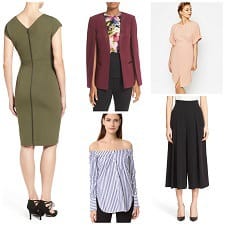
workwear

chair and mirror 007Whenever you have a seriously important professional day — for example, an interview — you need to be wearing your most conservative, “notice my brains not my fashion sense” outfit. This means, unfortunately, that you need to be sure you know how the suit you wear looks from all angles. How does it look if you need to reach across a table or desk to point to something? How does it look from the back — is there a slit in the skirt that goes too high? And finally — deathly important for interviews — how does your skirt suit look when you’re sitting down? Can you cross your legs, or do you show too much thigh?

Most women are well acquainted with checking their outfit out in the mirror before they run out the door, but for interview outfits you need to go even further. Pull a chair over to a full-length mirror and sit down in it — note how high your skirt goes when you sit. If you think you might be stooping at all during the day (to pick up papers or materials on the floor), do that as well. Basically, any possible action you might take during the day should be vetted between you and the mirror, to make sure you won’t be embarrassed.

{ 30 comments }

Today’s reader mail has to do with a summer abroad…

I’m a second-year law student and will be spending part of my summer interning for a government agency in Slovenia, and the rest at a study abroad program in London. My dilemma is that I only have a limited amount of space in my luggage (particularly due to the strict weight limits on European flights) and I need to pack for essentially three different trips: business, school, and backpacking (I’m going to be doing a lot of travel on the weekends). I’m lucky in that the place where I’ll be working only requires business casual, but considering that it is an Eastern European country, I don’t know quite what that might entail. I’m thinking I’ll definitely have to dress more conservatively than I would in the U.S. at the very least. Any suggestions would be welcome, particularly involving shirts I can wear to work and not look too dressy wearing them to school as well. My one limitation: please no button-ups! I’m what you would call a “busty” girl and button-ups never end well with me. Thank you so much for any advice you can give!


icon
iconFirst: we must confess, we’ve never worked in Slovenia or backpacked through Europe. Very exciting… as a luggage problem. We would recommend investing in silk t-shirts. Not the sweater kind, but the kind that feel like nylon almost. These can be hard to find, and aren’t necessarily expensive — of the few that we have, one was purchased at an Henri Bendel sample sale, one at Off Fifth, and the others at the Limited about fifteen years ago (ouch). The great thing about these shirts is that they dry uber-fast — perfect for stuffing in your bag to go backpacking — yet because they’re silk they look great under a suit jacket. For example, check out the Eileen Fisher Cap Sleeve Silk Tee at Nordstrom (pictured at right) for $88. Be sure to check out places like Travel Smith, which specializes in fabrics that travel well, breathe easily, and wash and dry quickly. (They even have a new outlet section.) Check out their dress selection, especially — some of them will work both for the office as well as for a a restaurant meal while traveling, such as the Microfiber Dress (for $89). Be sure to check out camping and other specialty stores for pieces that can do double-duty — EMS (check out the knee-length ExOfficio Women’s Savvy Dress Up for $60), REI (check out the Acme Pants, on sale for $109 — be sure to try them on to make sure they don’t sound like track pants when you walk) and other similar places.

As far as other clothes, not everything can be double-duty. Pack a suit for your work — even if you don’t wear it often, better safe than sorry. (Bring as many possible matching pieces — dress, skirt, etc — and see how many times you can recycle the outfit. You may want to check out Spiegel for this kind of thing — the prices are good and they have numerous matching pieces.) For school, some of it can be reused — for example, a plain black skirt, worn with a t-shirt and flats or flip-flops, is totally acceptable for school. We’d advise you to stay away from heavy stuff that only works for one of your three endeavors — will you wear jeans while backpacking? If not, don’t bring them to wear to school. Otherwise, make sure you maximize your luggage — you can buy various tools to “vacuum pack” your luggage (or do it yourself with Ziplock bags — they even have larger sizes out now). If possible, read up on how to pack wisely — for example, you may want to roll your clothes rather than folding them (we just did this with a bridesmaid dress and it worked beautifully). There are other tricks to be learned, such as how to pack a suit jacket so it isn’t wrinkled. And repackage as much as possible of your toiletries — think outside the box and try to use the smallest sizes possible. For example, we’ve put a week’s supply of eye-makeup remover in a single pill container — even if you have to use more than one you can still discard as you use up your supply. (Get a trusty label maker to make sure you don’t get anything confused.)

Pictured above: Skofja Loka, Slovenia, originally uploaded to Flickr by jaime.silva

{ 15 comments }

picture-2We’ve had a number of requests for how to build your wardrobe for a summer internship, so ladies, this one’s for you!

Suits. Yes, you will need more than one suit, but not as many as you think. For example, readers asked if they needed 10-15 suits (and we’re hoping the person asking if they needed 100 suits either made a typo or was exaggerating). We would say you need about 3-5 suits, to be worn whenever you know for sure you’ll be seeing a partner, executive, or other VIP that day. Keep an extra suit in your office if at all possible. Your basic suits should be:

1) Your standard interview suit in black, navy, or gray. Hopefully you took our advice and got it in a seasonless fabric, and you bought a suit that had multiple matching pieces (e.g., a jacket, pants, skirt, and a dress). Get them drycleaned as soon as they begin to smell, or approximately every 4-5 wearings.

2) As many other suits that your budget can afford that are like your interview suit, but in other colors — these suits will last you for several years, so it’s well worth it to invest $500-$1000 in suiting. If you can’t afford suits as nice as your interview suit, check out sales as well as:

  • outlet stores — Filene’s, TJ Maxx, Nordstrom’s Rack — all frequently have suits available for anywhere from $60-$200. These will typically be suit sets (not mix-and-match pieces the way Theory or J.Crew are) and will be in polyester blends. Try to get the most conservative suit they have that fits you well in sedate colors (black, navy, beige, gray). Watch out for details that date the suit, like puffed sleeves, Peter Pan collars, and ruffled skirts
  • large department stores — Macy’s has a huge suit selection, for example, with tons of Tahari suits available for under $150
  • outlet malls, like Woodbury (in upstate New York) or Leesburg (outside D.C.) — they frequently will have outlet stores of Banana Republic, Kasper, Tahari and Brooks Brothers, as well as larger department store outlets (like Barney’s and Off Fifth) that will have discounted suits.
  • mall stores, like Express, Limited, Victoria Secrets — they will have lower-quality suits that should at least last you a summer, although the fabrics might not wear well during the summer
  • We would advise avoiding eBay and consignment stores unless you know exactly what you’re looking for.

Other pieces. Now that you’ve got your suits, we would advise getting a few other pieces to wear as separates throughout the summer. This may sound weird (and please debate in comments!) but we would advise buying other separates — intended by the retailers as separates — for everything by below because fabrics and colors are often hard to match. For example, a pair of gray Gap pants and a black jersey sweater blazer look fine together — but a pair of gray suit pants worn with a black suit jacket just looks like you’re trying to mix things that don’t match. This may seem like a boring list, but it’s intended to be a skeletal one — your personality and tastes should fill in the rest of the picture; these are just the building blocks to get you started. Our list of these basic separates:

  • 2-3 pairs of nice trousers (not too tight, not too lose; they can be as simple as Gap or Old Navy as long as they fit well)
  • at least one pencil skirt in a basic color like black or gray
  • 5-10 nice tops to wear beneath suits or on top of trousers in flattering colors — again, they don’t have to be fancy, but they have to fit well and look nice (not washed out). If you want to be very efficient here, buy tops in the same color range as your suits — for example, if you’ve got a black suit and gray trousers, buy t-shirts in cool colors (blue, purple, green) to compliment those accessories. If you’ve got a brown suit and some nice beige slacks, get warmer colors like reds and oranges.
  • a black fitted blazer (look for one in a stretch cotton or jersey for versatility — keep it at the office to throw on in emergencies)
  • a neutral sheath dress in a flattering shape
  • at least one twinset in a good fabric (possibly in white so you can wear the sweater beneath brown/beige/gray/navy suits, and wear the cardigan over sheath dresses and trousers). If you look for a twinset that does not have a ribbed, banded bottom, you’ll have more options with it.
  • Another cardigan, possibly, in black or white

Accessories. The summer job is really more about avoiding inappropriate accessories than buying fabulous ones — as you go forward in your career you’ll want to invest the most heavily in shoes and bags. For the summer, we say that a pair of black leather pumps that you can walk in is really all you NEED. Otherwise, don’t wear:

  • open-toed shoes
  • sandals
  • any shoes that look too sexy (heeled gladiators, platforms, etc)
  • shoes you can’t walk in
  • overly blinged-out accessories (e.g., brooches with sequins)
  • bracelets
  • earrings that noticeably dangle (they should be as close to your earlobe as possible)
  • anything that makes sound when you walk down the hallway carrying or wearing it (slingbacks and mules, we’re looking at you)
  • athletic accessories — sneakers or flipflops are fine if you must for the commute, but the second you get inside you should change to work shoes — we’d also advise women to avoid backpacks and other gym bags. If you don’t have something, check out our recent suggestions for good bags.

These seem, to us, the bare basics for a working wardrobe. A final piece of advice — never walk in the hall with your arms uncovered — wear your suit jacket, sweater, or fitted blazer. Readers, what say you?

{ 77 comments }

We’ve been mulling this reader’s question for a while now… first, here’s the request:

My work wardrobe after 30 years is pretty set. However, I’m currently in recession mode, i.e. my job has been misplaced. I find that my non-work clothes are just not suitable for walking around in the supermarket, given that in my community (high tech in Silicon Valley) I might meet someone there who would hire me. So I want to upgrade what would be my weekend wardrobe (if I were working). Can you help? I have my dilemma posted here.  I hope this doesn’t take you beyond the scope of your blog, but once we get to the executive ranks, I have found that networking etc. can extend the requirements and definition of “professional style”.

We went to her website, and this is what she wore out to drinks with former coworkers:

Wow.  Ok.  First, some general theories on being “laid off and looking,” as the WSJ puts it. Keep your confidence high — don’t wear sweats or other clothes that you would normally use to clean the garage.   Networking is a lot about likeability; the more a person likes you — and respects you and thinks you’re competent and cool — the more they’re going to be willing to introduce you to their friends or, should a job open up, think “Oh, let’s get X in here; she’d be great for the spot and fun to work with.”  So our advice here is kind of like advice to teenagers: act cool, and you WILL be cool. Above all, your clothes should be clean, non-ripped, and the overall vibe you should strive to give off is “I’m just running a few errands before my fabulous dinner party,” not “I’m making an emergency run to the pharmacy in the middle of the night.”

picture-6That said, for running errands and lounging around the house, we recommend wearing the tightest pair of jeans that you own and fit into comfortably (so as to prevent any recession weight gain, or at least recognize it early).  They shouldn’t be skintight, but they should FIT — no elastic waists or pants that are several sizes too big for you. There is plenty of advice to be found on the Internet and in ladies’ magazines about which jeans might work for you, and a huge price range to consider (from $20 to $300+).  Generally, we would recommend finding a dark color in a bootcut or straight-leg style; if you get one with a bit of lycra in it, it will be more comfortable for hanging out around the house. Check Levi’s or Uniqlo if you’re on a budget; we’ve also heard excellent things about Old Navy’s jeans. At right: Levi’s Boot Cut 515 Stretch Jean, available at Sears.com for $29.99. If you areWomen: Curvy flare pants - earth brown really, really not a jeans person, we would possibly recommend some bootcut khakis or pants with a bit of stretch, such as these from Gap, also at right. Again, the leg should be straight or bootcut unless you can really own the other trends out there like the skinny pants or the boyfriend jeans. (Women: Curvy flare pants – earth brown, available at Gap.com on sale for $45.)

Ok. So now that you’ve got your jeans on, let’s ditch the scrunchie. (You could burn it. Just a suggestion.) Instead, you may want to look into an understated claw or some elastics. Now, let’s ditch the sweatshirt. We would recommend wearing a well-fitting t-shirt in a basic color — black, white, your favorite color, whatever. By “well-fitting” we mean that it should skim your body (not hugging it, and not too boxy) and hit at the right spot on your hips (not too high — the belly shirt has (thankfully) not made a return since the late ’90s — and not too low, either, as the uber-low movement seems to have passed).  Again, there’s a big variety, but the stores for basics — Old Navy, Gap, Banana, J.Crew — are going to be your friends here.

Next, the shoes and the jacket, which are, simultaneously, the easiest and hardest parts. We say “easy” because this is your personality shining through, but it’s also hard just because there are so many options.  Assuming the shoes you wore at work are either uncomfortable or inappropriate for running around town, there are still a ton of feminine, comfortable options that are far, far better than white athletic shoes.  For example, some choices for the shoes:

Cole Haan - Air Bria Stitch MJ (Black) - Footwear
Low Mary-Janes or ballet flats are a great look that can be worn with socks or not. Some brands to consider: Cole Haan Nike Air, Geox, Born. Pictured: Cole Haan – Air Bria Stitch MJ (Black) – Footwear, on sale at Zappos for $122 (from $168)
Converse - Chuck Taylor All Star Ox (Purple Passion) - Footwear
White sneakers with a heavy tread are fine for working out, but there are a ton of more fashionable, sporty shoes that serve as great “running errand” shoes. Some sample brands to consider: Converse, Puma, Keds, and Asics. Pictured: Converse – Chuck Taylor All Star Ox (Purple Passion) – Footwear, available at Zappos for $45.
Indigo by Clarks - Tanzania (Light Brown Leather) - Footwear
There are a ton of other brands out there that might be a bit too chunky for the office, but are great for running around town and staying comfortable. Some brands to consider: Clarks, Born, Sofft, Beautifeel, and Dansko. Pictured: Indigo by Clarks – Tanzania (Light Brown Leather) – Footwear, available at Zappos for $100.

Next, a light jacket — again, there are a ton of options but pretty much anything is better than a sweatshirt.  For example:

A fitted blazer in a casual fabric — twill, cotton, even a non-blue denim — can be great for running around town. In fact, you may already have some of these in your collection. Pictured: Women: Women’s Twill Blazers – Track Green, available at OldNavy.com for $30. Women: Women's Twill Blazers - Track Green
Traditional ladycoats are another great option, and also available in a huge variety of price points. You’re looking for a fabric that’s breathable and machine washable, in a cut that is flattering to you — it shouldn’t be too big and overwhelm your stature, and it shouldn’t be too tight, either. Pictured: Gallery A-Line Topper, available at Nordstrom’s for $110.
icon
icon
Cardigans and sweaters are another great option (and can be cleaned sporadically when worn with a t-shirt or something with sleeves beneath it). Some are even made from sweatshirt materials like fleece. Pictured: C&C California Fleece Tie-Front Jacket, on sale for $49 (was $130).

Best of luck to you in your search — readers, please tell us if you have other thoughts on what to wear when you’re looking!

{ 36 comments }

Ellen Parsons took interviewing seriously... so should you!

Wow, it’s the start of the interview season already for those of you still in law school. Good luck! Stay tuned; we’re going to (try) to do a lot about interview tips and a guide to women’s suits. Immediately, though, we have this question from a reader named Summer:

I am a 3L law student looking to buy a nice conservative suit for interviews. I am also a big fan of corporette! I have looked around malls and nothing seems to be nice enough. The only thing that I have found in my size online is Talbots. I also ran across the site www.mycustomclothing.com. Do you think this site is legitimate? Do you have any other recommendations?

Thank you so much for your kind words! We’re not familiar with the site, but we wouldn’t recommend going with a custom suit for a big interview unless you already had a relationship with an amazing tailor. Our best advice with interviewing for conservative jobs is that the entire goal of your interview wardrobe should be to take the focus off your appearance and put the focus where it should be: on your mind, your accomplishments, and the way you carry yourself. You can show your personality, your taste, your quirky sense of humor — whatever! — later, after you’ve got the job. That said, we might suggest adhering to some simple guidelines when buying clothes for interviewing.

  • Buy within your budget. No one’s going to “ding” you on an interview because your suit isn’t Armani.
  • Choose a dark suit. A black or navy suit is always more conservative than a brightly- or lightly-colored suit, and if you have to buy something inexpensive then it will hide the imperfections in the fabric and the seams.
  • Buy a skirt suit. We know, we know: feminism, equality, misogyny, etc. We’re not saying it’s cool. We’re saying it’s a crazy world out there and you should go with the most conservative option available if you want the job — which for women is a skirt suit. The skirt should be knee-length or slightly above the knee. If there’s a slit in the back of the skirt, make sure that a) you’ve pulled out any threads that “closed” the slit with a big X, b) the slit doesn’t go so high that you’re showing your upper thighs or worse — if you’re wearing control-top pantyhose those control tops should not be showing, and c) if it’s an old skirt, make sure the slit isn’t in need of repair. We tend to wear dark pantyhose (“off black” or gray is our preference, for some reason) but in writing this we’ve realized we’re not absolutely sure what’s appropriate — good thing tomorrow is the poll of the week! Be sure you pull a chair over to a full-length mirror and practice sitting in the skirt suit; you want to see what the interviewer will see and make sure you look appropriate and tasteful.
  • Dress for the season you’re in. If you’ve got an interview this week, please don’t go in wearing a tweed suit — you’ll look like you’re not aware of your surroundings. Similarly, if you’re interviewing in January or April, don’t go in wearing a white linen suit.
  • Wear a suit that fits well. We’ve all had it happen: you gain a few pounds and swear you’re going to take it off so there’s no point in buying new clothes. Trust us, we hear you. This is one of those times that you’ve got to just suck it up and go buy a bigger size (or two), because you will be dinged for your appearance if your suit is too tight. See our Lisa Cuddy 360 Review for reference, but here are some telltale signs your suit does not fit you:
    • You can’t button the jacket, or the buttons don’t lay flat once buttoned
    • The skirt is “smiling” because it’s being pulled so tight across your hips
    • When you walk the skirt hikes itself up because it’s too tight across your hips
    • Your arms look like sausages in the jacket
    • You can’t lift your arms above your head

{ 42 comments }

Terms of Use; Privacy Policy